

It is amazing how complete is the delusion that beauty is goodness.
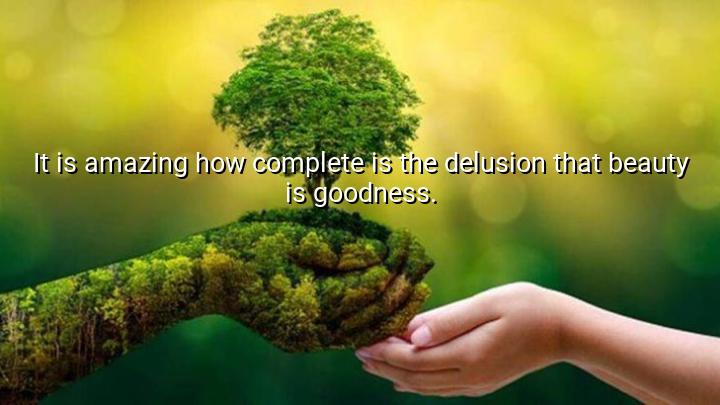




The quote by Leo Tolstoy — "It is amazing how complete is the delusion that beauty is goodness." — reflects Tolstoy's critique of society’s tendency to equate physical beauty with moral goodness. He suggests that people are often deceived by outward appearances, believing that someone who is beautiful must also possess good character and virtuous qualities. The word "amazing" emphasizes the extent of this delusion, pointing out how deeply ingrained this belief can be in society, even though it is ultimately an illusion.
Tolstoy’s statement highlights the superficiality of judging a person’s worth based solely on their appearance. The delusion he refers to implies that society often ignores the inner qualities that define a person's true nature. By calling this belief a delusion, Tolstoy challenges us to reconsider how we value others, urging us to look beyond beauty and focus on character, actions, and morality instead.
The origin of this quote likely comes from Tolstoy's own reflections on human nature and society, themes that he frequently explored in his novels like Anna Karenina and War and Peace. Known for his deep philosophical and moral insights, Tolstoy often critiqued societal norms, particularly those related to materialism and appearances. His works delve into the complexity of human behavior and the dangers of superficial judgments.
Ultimately, Tolstoy’s words encourage us to look beyond physical beauty and to question the assumptions we make about people based on their appearance. His quote serves as a reminder that goodness comes from within, not from how someone looks, and that true character is far more important than outward beauty. The statement calls for a deeper understanding of people, one that values their moral and ethical qualities over their external traits.

TMNguyen Thi Tra My
This quote reminds me how misleading first impressions can be. It raises a deeper question: how much of our moral compass is influenced by superficial traits? In a world obsessed with image—social media especially—are we training the next generation to value aesthetics over ethics? What kind of damage does that cause to our relationships, expectations, and even leadership choices? It’s a sobering thought that beauty can blind us so easily.
DNQuang Duy Nguyen
Can anyone explain why, despite knowing better, we still fall for this illusion? Even well-informed people often give more opportunities or benefit of the doubt to those who are more attractive. It’s not just unfair—it’s irrational. Is there any research that explains this phenomenon from a psychological or evolutionary standpoint? I’d love to understand how deep this delusion runs in our human wiring.
TDPham Nguyen Thao Duyen
I find this quote disturbingly accurate. It’s amazing how often movies, advertising, and even fairy tales reinforce the idea that good people must be beautiful. It makes me wonder—how does this bias affect those who don’t fit conventional standards of beauty? Are they subconsciously assumed to be less good or less worthy? This seems like a big reason why discrimination persists. What do we need to change to break that illusion?
HTle hien trang
Tolstoy’s observation is brutally honest. I’ve definitely caught myself assuming the best of people just because they looked appealing or had a certain charisma. But what does that say about how we judge others? Are we more comfortable being deceived by beauty than confronting ugliness that may contain truth or virtue? This quote really challenges us to rethink how we define and value goodness beyond physical appearance.
Nnam
This quote makes me reflect on how often society equates attractiveness with moral character. Why do we assume someone who looks 'beautiful' must also be kind or trustworthy? Is it because of media conditioning or some deeper psychological bias? I wonder how many times people have been misled by appearances and ignored red flags simply because someone looked charming. It’s such a fascinating—and dangerous—cognitive shortcut we all seem to make.