

It is all very well to copy what one sees, but it is far better to draw what one now only sees in one's memory. That is a transformation in which imagination collaborates with memory.
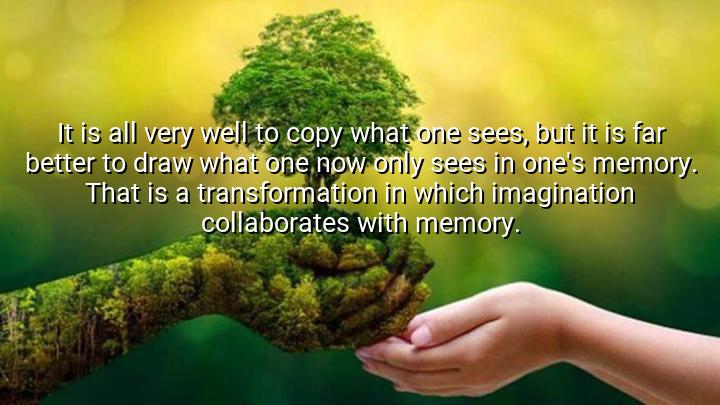




In the quote "It is all very well to copy what one sees, but it is far better to draw what one now only sees in one's memory. That is a transformation in which imagination collaborates with memory," Edgar Degas emphasizes the value of creativity and imagination in the artistic process. He suggests that while copying from direct observation is a useful skill, true artistic expression comes from transforming what is stored in memory and letting imagination shape it into something new. By doing so, the artist not only recreates what is seen but also reinterprets and reimagines it, adding personal and creative insight.
Degas, a French painter and sculptor, was known for his work in Impressionism and for capturing scenes of modern life. His statement reflects the belief that art is not merely about replication but about personal interpretation. The role of memory is crucial here, as it allows the artist to filter and transform visual experiences, using them as a foundation for creative work rather than merely reproducing them exactly as they are seen.
The quote also touches on the idea that memory and imagination work together to create something unique. While memory preserves experiences and images, imagination brings them to life in a new form, allowing the artist to play with perspectives, feelings, and interpretations. This collaboration between the two elements leads to a more personal and original representation of the world, where the artist's inner vision takes precedence over mere observation.
Ultimately, Degas’ quote underscores the importance of creative interpretation in art, where true innovation arises from the interaction between memory and imagination. By encouraging artists to move beyond simply copying what they see, Degas advocates for a more expressive, transformative approach to art that reflects not just the outer world but also the inner workings of the artist’s mind.

AAdministratorAdministrator
Welcome, honored guests. Please leave a comment, we will respond soon