

It behooves every man who values liberty of conscience for himself, to resist invasions of it in the case of others: or their case may, by change of circumstances, become his own.
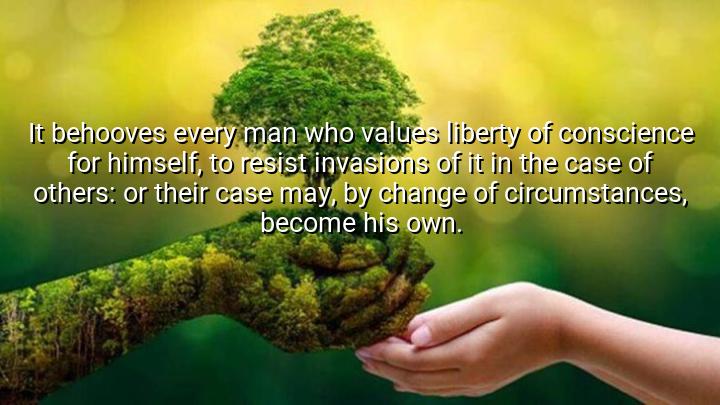




The quote "It behooves every man who values liberty of conscience for himself, to resist invasions of it in the case of others: or their case may, by change of circumstances, become his own." by Thomas Jefferson underscores the importance of defending freedom of thought, belief, and individual conscience—not only for oneself, but for all people. Jefferson, one of the Founding Fathers and the principal author of the Declaration of Independence, was a strong advocate for civil liberties, particularly religious freedom and freedom of expression. In this quote, he warns that the erosion of rights for one group can eventually endanger the rights of all.
The phrase "liberty of conscience" refers to the freedom to think, believe, and follow one's own moral or religious convictions without coercion. Jefferson believed that this liberty is a natural right, and that allowing it to be violated—even in the case of others—sets a dangerous precedent. The term "behooves" suggests a moral duty or responsibility; he is calling on individuals to stand up against any form of oppression that infringes on this basic freedom.
Jefferson’s caution that “their case may... become his own” reflects a deeply principled warning: when we allow injustices to happen to others, we risk creating a system that could eventually turn against us. This idea is rooted in the Enlightenment thinking of the time, which emphasized universal rights and mutual accountability within a just society. In essence, freedom is interdependent—it cannot be preserved selectively or selfishly.
This quote is a timeless call for solidarity in the defense of human rights. Jefferson reminds us that the protection of liberty must be collective, and that turning a blind eye to the suppression of others’ freedoms weakens the very foundation of our own. In defending the rights of others, we are also securing the future of our own freedoms.

AAdministratorAdministrator
Welcome, honored guests. Please leave a comment, we will respond soon