

In our age of individualism, we see computers as ways through which we can express our individuality. But the truth is that the computers are really good at spotting the very opposite. The computers can see how similar we are, and they then have the ability to agglomerate us together into groups that have the same behaviours.
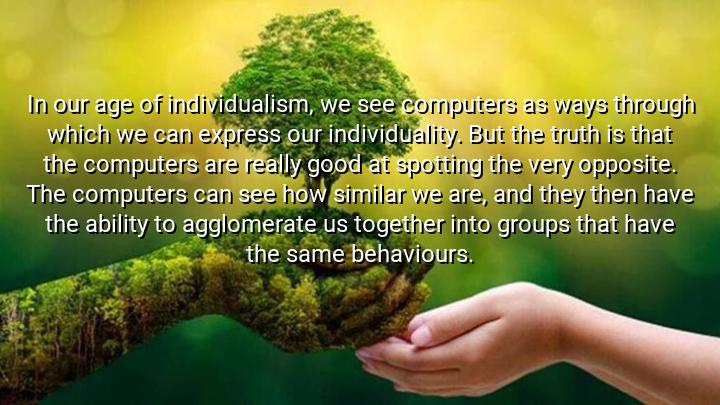




The quote by Adam Curtis, "In our age of individualism, we see computers as ways through which we can express our individuality. But the truth is that the computers are really good at spotting the very opposite. The computers can see how similar we are, and they then have the ability to agglomerate us together into groups that have the same behaviours," reflects a critical perspective on the role of technology in modern society. Curtis is pointing out that while we often view computers and digital tools as vehicles for personal expression, the reality is that they are far better at identifying patterns and similarities among people, leading to the creation of data-driven groups based on behaviors, preferences, and actions.
Adam Curtis, a British documentary filmmaker, is known for his explorations of the intersections between media, technology, and society. This quote is in line with his broader themes of how modern technology often results in more control and conformity rather than the individual freedom we expect. In this context, Curtis is cautioning that, rather than enabling true individualism, computers and the data they generate have the power to categorize and standardize people into groups based on their behaviors and characteristics.
The idea that computers can identify similarities rather than celebrate individuality speaks to the inherent power of data analytics and algorithmic sorting. While we might think that we are expressing unique aspects of our identity online or through digital platforms, computers are actually able to predict our preferences, categorize us into demographics, and shape our online experiences to align with others who share our behaviors. This kind of data-driven grouping creates a more homogenous experience, reducing the opportunities for true personal differentiation.
Ultimately, Curtis’s quote serves as a warning about the paradox of technology in an age that celebrates individualism. While we may feel more free to express ourselves digitally, computers and algorithms are actually pushing us toward greater conformity, reducing our individuality in the process. It challenges us to reconsider how much true freedom we have when technology is constantly organizing, categorizing, and predicting our behaviors based on data.

AAdministratorAdministrator
Welcome, honored guests. Please leave a comment, we will respond soon