

In modern business it is not the crook who is to be feared most, it is the honest man who doesn't know what he is doing.
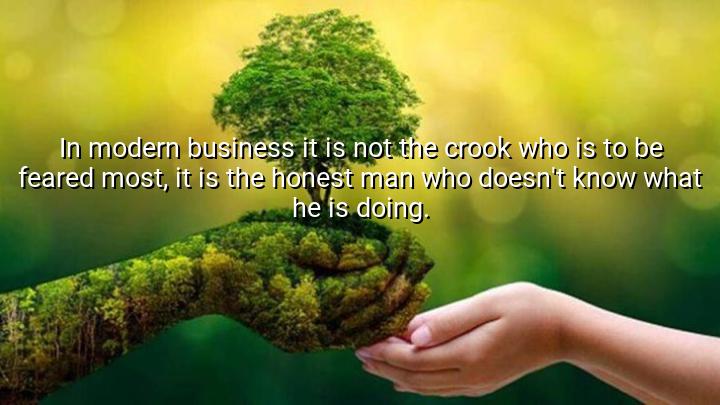




William Wordsworth, the famed English poet, is often credited with this quote, though it is likely misattributed, as it does not align with his usual themes of nature and romanticism. Regardless of its origin, the statement carries a powerful message about business and competence. By saying, “it is not the crook who is to be feared most, it is the honest man who doesn’t know what he is doing,” the quote suggests that incompetence can be far more damaging to an organization than intentional wrongdoing.
The quote highlights the reality that a crook often has limited reach and can be identified and stopped, but an honest yet incompetent person may unintentionally cause widespread harm. In modern business, poor decisions, mismanagement, or lack of knowledge from well-intentioned individuals can lead to serious consequences, such as financial losses, reputational damage, or even company failure.
The origin of this quote’s sentiment aligns closely with the broader philosophy seen in management and leadership: that good intentions are not enough. Organizations need capable leaders and employees who understand their responsibilities and have the skills to execute them effectively. This idea remains a cornerstone of business education and strategic planning.
Ultimately, the quote serves as a warning. While ethical behavior is essential, pairing it with competence is equally critical. A company must ensure its leaders and teams are properly trained and knowledgeable, because even the most well-meaning mistakes can have lasting, negative effects.

AAdministratorAdministrator
Welcome, honored guests. Please leave a comment, we will respond soon