

Illness strikes men when they are exposed to change.
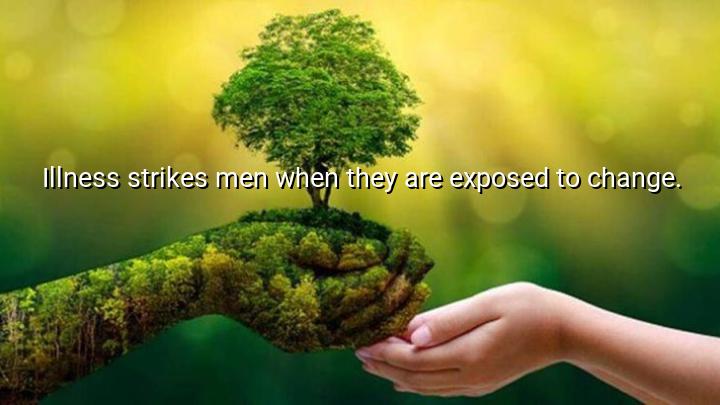




The quote, “Illness strikes men when they are exposed to change,” is attributed to Herodotus, often called the "Father of History," a Greek historian from the 5th century BCE. Herodotus is renowned for his detailed accounts of ancient cultures and events, often blending historical facts with observations on human nature. This quote reflects his early understanding of the connection between environmental changes and human health.
At its core, the quote highlights the vulnerability of the human body when confronted with change, particularly changes in climate, lifestyle, or surroundings. Herodotus observed that shifts in environment could disrupt the body’s balance, making people more susceptible to illness. This insight, though simple, anticipates modern ideas about how stress and sudden changes can impact physical and mental health.
The statement also carries a broader metaphorical meaning. Beyond physical health, it can be interpreted as an observation about human resistance to change in general. Just as the body can suffer when faced with abrupt shifts, so too can the mind and spirit experience discomfort or turmoil when forced to adapt quickly or unexpectedly.
Ultimately, Herodotus’ quote reflects an early recognition of the profound effects that change—both external and internal—can have on human well-being. It invites reflection on the importance of resilience and adaptability in maintaining health and stability amid the inevitable fluctuations of life.

AAdministratorAdministrator
Welcome, honored guests. Please leave a comment, we will respond soon