

If we openly declare what is wrong with us, what is our deepest need, then perhaps the death and despair will by degrees disappear.
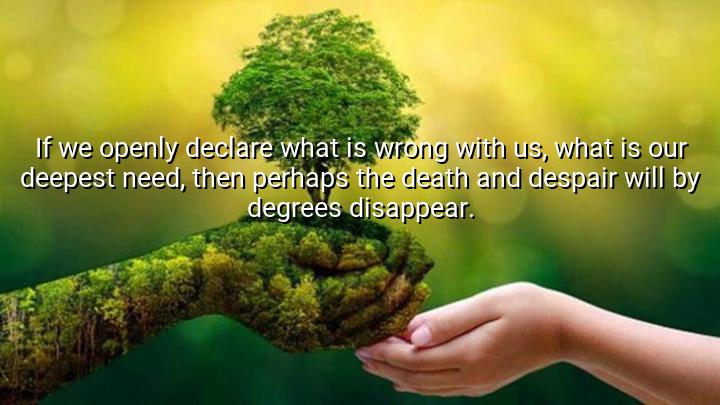




In this quote, J. B. Priestley suggests that by openly acknowledging our flaws and deepest needs, we can begin to address and alleviate the feelings of death and despair that plague us. Priestley implies that self-awareness and honesty about our struggles are the first steps toward healing. By confronting what is wrong within ourselves, we create the possibility for growth, understanding, and ultimately, transformation in our emotional and mental states.
The idea that death and despair can fade by recognizing our personal needs points to the power of vulnerability and communication. Priestley suggests that when we are open about our internal struggles, it allows for empathy, support, and the opportunity for others to help us find solutions or at least offer comfort. This openness is a form of catharsis, where acknowledging pain can lead to release and the gradual fading of overwhelming negative emotions.
Priestley's quote also speaks to the importance of self-reflection and the healing power of acknowledging the truth of our emotions. By addressing our inner turmoil and openly expressing our vulnerabilities, we begin to reduce the stigma around suffering. It suggests that once we stop hiding or repressing our struggles, we allow space for compassion, understanding, and the possibility of recovery.
Originating from J. B. Priestley, a British writer and social critic known for his works on the human condition and societal issues, this quote reflects his belief in the importance of honesty and social change. Priestley often explored themes of social responsibility, self-awareness, and the impact of human connection on emotional well-being. Through this quote, he encourages a culture of openness and vulnerability, advocating for a shift towards emotional honesty as a means of alleviating collective suffering.

AAdministratorAdministrator
Welcome, honored guests. Please leave a comment, we will respond soon