

If we must die, we die defending our rights.
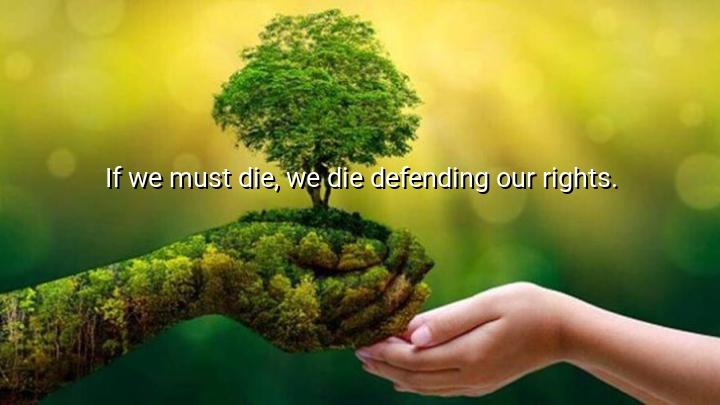




The quote by Sitting Bull, "If we must die, we die defending our rights," speaks to the principle of resistance and the unwavering commitment to protect one's freedom and dignity, even at the cost of life. Sitting Bull, a prominent Lakota Sioux leader, expresses the belief that if death is inevitable, it should come while defending the fundamental rights and freedom of his people. The statement is a declaration of courage and defiance, suggesting that the act of standing up for one's rights is worth any sacrifice, even the ultimate one.
Sitting Bull was a key figure in the resistance against U.S. government policies that sought to displace Native American tribes and diminish their rights to their land and culture. His leadership during the Battle of Little Bighorn in 1876, where Native American forces decisively defeated General Custer's troops, symbolized his commitment to resisting the forced assimilation of his people. This quote encapsulates his attitude toward colonization and the loss of sovereignty—that rather than submitting to injustice, it was better to face death while defending what was rightfully theirs.
The quote also speaks to the broader theme of self-determination. For Sitting Bull, the defense of rights was not just a matter of survival but a means of maintaining identity, dignity, and autonomy. In his view, dying in the service of these principles would ensure that the spirit of his people would live on in their fight for freedom, even if their bodies were lost.
Ultimately, Sitting Bull's words capture the courage and resolve of a leader determined to defend the rights of his people against overwhelming odds. His declaration serves as a reminder of the lengths to which individuals and communities will go to preserve their freedom and identity, even in the face of oppression and imminent danger. The quote remains a powerful symbol of resistance and the unwavering belief in the right to live freely.

AAdministratorAdministrator
Welcome, honored guests. Please leave a comment, we will respond soon