

If I agree to dispose of any part of our land to the white people I would feel guilty of taking food away from our children's mouths, and I do not wish to be that mean.
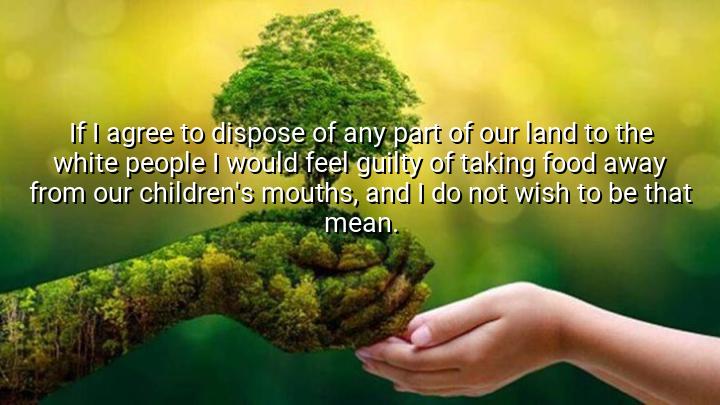




The quote "If I agree to dispose of any part of our land to the white people I would feel guilty of taking food away from our children's mouths, and I do not wish to be that mean." by Sitting Bull, the renowned Hunkpapa Lakota Sioux leader, reflects a deep and unwavering commitment to protecting Native lands and future generations. For Sitting Bull, land was not merely property—it was the source of life, identity, and spiritual connection. In his eyes, to surrender even a portion of it would be equivalent to depriving his people, especially the children, of their sustenance, dignity, and survival.
Sitting Bull’s reference to "taking food away from our children's mouths" is a powerful metaphor that highlights the interdependence between land and livelihood. He understood that Native communities relied on the land not just for hunting, farming, and shelter, but also for the cultural traditions that sustained their way of life. By resisting the sale or seizure of land by white settlers and the U.S. government, he was standing against the systemic erasure of his people’s future.
The origin of this quote comes during a time of increasing pressure on Native American tribes in the 19th century to cede territory to the expanding United States. Sitting Bull was a central figure in resisting this encroachment, particularly around key events like the Great Sioux War and the Battle of the Little Bighorn. His leadership was grounded in a belief that honoring the ancestors and protecting the generations to come was a sacred duty, one he would not compromise for political or material gain.
Ultimately, this quote serves as a heartfelt declaration of moral responsibility, resistance, and stewardship. Sitting Bull refused to be complicit in the dispossession of his people, recognizing that short-term compliance would result in long-term suffering. His words remain a powerful testament to the enduring struggles of Indigenous peoples to preserve their land, rights, and dignity in the face of colonization and injustice.

AAdministratorAdministrator
Welcome, honored guests. Please leave a comment, we will respond soon