

If we expect our children to thrive at our colleges and universities, and succeed in our economy once they graduate - first we must make quality, affordable early childhood education accessible to all.
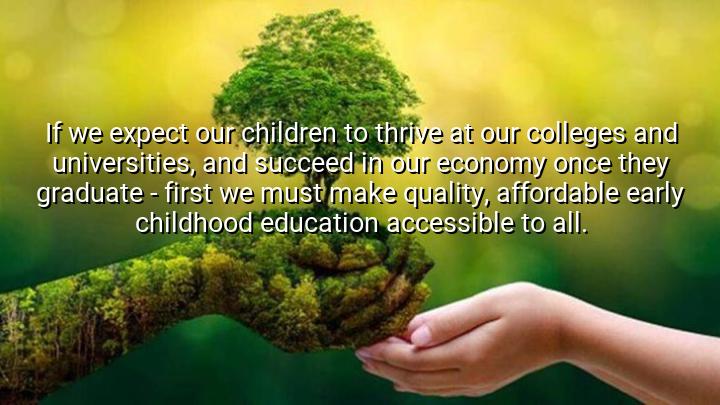




The quote “If we expect our children to thrive at our colleges and universities, and succeed in our economy once they graduate – first we must make quality, affordable early childhood education accessible to all.” by Kirsten Gillibrand emphasizes the foundational role of early childhood education in lifelong success. She argues that before young people can excel in higher education and contribute effectively to the economy, they must have access to strong educational opportunities from the very beginning of their lives.
By stressing quality and affordability, Gillibrand highlights two critical challenges in education policy. Many children, especially from disadvantaged backgrounds, are unable to access the resources that would prepare them adequately for academic success. Without an equal start, the gap between students widens over time, making it harder for some to thrive in colleges and universities and ultimately succeed in their professional lives.
The origin of this perspective lies in Gillibrand’s work as a U.S. Senator and advocate for education reform. She has often spoken about the importance of investing in children at the earliest stages, framing early education as both a social and an economic issue. By linking early learning to future economic success, she reinforces the idea that educational equity is not only a moral imperative but also essential for national growth and competitiveness.
In essence, Gillibrand’s quote reflects the belief that a strong democracy and economy depend on giving every child a fair chance from the start. Early childhood education serves as the cornerstone of opportunity, ensuring that when students eventually reach college and the workforce, they are prepared to thrive. This vision ties individual success to collective responsibility, urging society to invest in its youngest members.

AAdministratorAdministrator
Welcome, honored guests. Please leave a comment, we will respond soon