

If my survival caused another to perish, then death would be sweeter and more beloved.
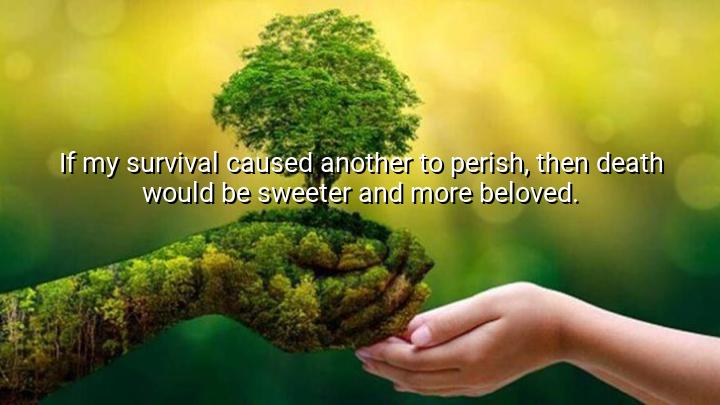




The quote "If my survival caused another to perish, then death would be sweeter and more beloved" by Khalil Gibran reflects the profound selflessness and moral dilemma that comes with the consequences of one's actions. Gibran emphasizes the idea that the act of living should not come at the cost of another's well-being. It speaks to the ethical principle that the value of one life should not overshadow the loss of another.
Originating from his writings, which often explore themes of love, sacrifice, and human connection, this quote delves into the complexity of survival and death. Gibran's works are deeply philosophical, often reflecting his thoughts on the interdependence of all beings and the cost of living. His message here is a poetic reflection on how human existence and its inherent struggles should not lead to harm or the downfall of others.
The quote also highlights the philosophical stance that true peace or fulfillment can only be achieved when one's actions are in harmony with the welfare of others. In a world where individual survival often leads to competition or sacrifice, Gibran suggests that the essence of life should align with greater humanity, where survival does not necessitate the destruction of others. This perspective challenges the common tendency to prioritize self-preservation at any cost.
In essence, Gibran’s quote reminds us of the moral responsibilities we carry in our interactions with others, urging that the cost of survival should never come at the expense of another’s life, and if it does, the sweetness of that survival would be tragically hollow.

AAdministratorAdministrator
Welcome, honored guests. Please leave a comment, we will respond soon