

I was a girl in a land where rifles are fired in celebration of a son, while daughters are hidden away behind a curtain, their role in life simply to prepare food and give birth to children.
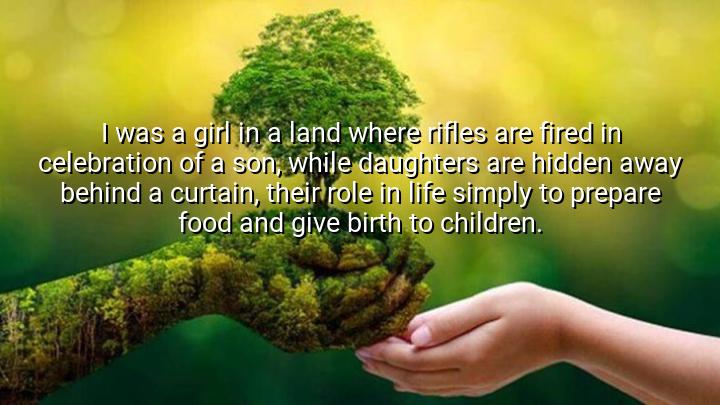




The quote “I was a girl in a land where rifles are fired in celebration of a son, while daughters are hidden away behind a curtain, their role in life simply to prepare food and give birth to children.” by Malala Yousafzai powerfully highlights the deeply rooted gender inequality and patriarchal traditions in parts of the world, particularly in her home region of Pakistan's Swat Valley. Malala, a globally recognized education activist and Nobel Peace Prize laureate, uses this statement to illustrate the oppressive conditions many young girls face, where their value is diminished simply because of their gender.
Through this vivid comparison between the celebration of sons and the seclusion of daughters, Malala exposes the cultural mindset that glorifies male children while treating females as invisible, with limited roles and few rights. The mention of girls being “hidden away behind a curtain” symbolizes the restriction of freedom, lack of education, and suppression of voice that many girls endure in such societies. Their futures are often reduced to domestic duties and childbearing, denying them the opportunity to dream, learn, or lead.
Malala’s quote originates from her personal experiences growing up in a conservative community where girls' education was not only discouraged but, at times, violently opposed. Her activism began when she defied the Taliban's ban on girls attending school, an act that led to an assassination attempt on her life. This statement captures the contrast between her aspirations and the rigid expectations imposed on her and countless other girls.
Ultimately, this quote is a call for change—a demand for gender equality, educational access, and human dignity for all girls. Malala's words challenge cultural norms and encourage the world to recognize the potential and rights of every child, regardless of gender. It serves as both a personal testimony and a rallying cry for the empowerment of women and girls globally.

AAdministratorAdministrator
Welcome, honored guests. Please leave a comment, we will respond soon