

I think people in Europe are generally pessimistic about the future. They have low expectations; they're not working hard to change things. When you're a slacker with a pessimistic view of the future, you're likely to meet those expectations.
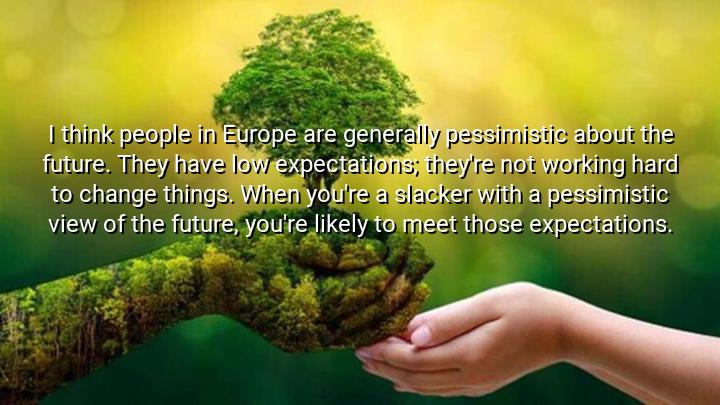




The quote "I think people in Europe are generally pessimistic about the future. They have low expectations; they're not working hard to change things. When you're a slacker with a pessimistic view of the future, you're likely to meet those expectations." by Peter Thiel reflects a critical perspective on what he sees as a lack of ambition and innovation in European societies. Thiel, a well-known entrepreneur and venture capitalist, is contrasting what he perceives as Europe's cultural stagnation with more optimistic, forward-looking attitudes found in other parts of the world — particularly the United States and parts of Asia.
Peter Thiel, co-founder of PayPal and the first outside investor in Facebook, is known for his provocative statements and strong opinions on technology, economics, and civilizational progress. This quote likely comes from his broader discussions on entrepreneurship and the role of visionary thinking in shaping the future. For Thiel, expectation plays a powerful role in shaping outcomes — if a society expects decline, it may unconsciously allow that decline to become a reality.
By using terms like "slacker" and emphasizing "low expectations," Thiel criticizes what he sees as a cultural acceptance of mediocrity and a reluctance to take risks or embrace bold innovation. His view suggests that mindset is as important as policy or economic conditions — that progress requires belief in the possibility of improvement, along with the hard work and initiative to pursue it.
Ultimately, this quote is a reflection of Thiel’s core philosophy: that optimism, ambition, and a strong work ethic are essential ingredients for building a better future. Whether one agrees with his generalization about Europe or not, his statement is meant to provoke thought about how attitudes toward the future influence not only personal success but also the broader trajectory of societies.

AAdministratorAdministrator
Welcome, honored guests. Please leave a comment, we will respond soon