

I think our problems are inherently unsolvable. We need to change our genetic make-up or create computers that will think us out of it. I don't think humans are able to deal with what we have.
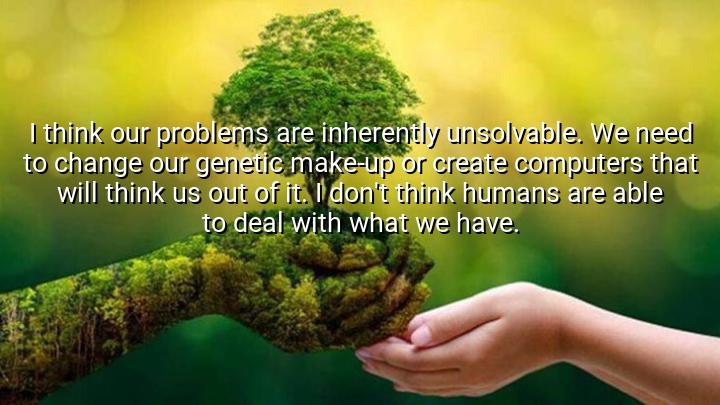




Neill Blomkamp’s quote reflects a pessimistic view of humanity’s ability to solve the complex problems it faces. He suggests that many of the problems we encounter are so deeply ingrained and intricate that they are inherently unsolvable by human means alone. Blomkamp proposes two potential solutions to this dilemma: changing our genetic make-up or creating computers that can think and solve problems beyond human capability. This highlights his belief that humanity is limited in its ability to address the challenges it faces without the aid of advanced technology or radical change.
The idea of changing our genetic make-up reflects a belief in the potential of biotechnology and genetic engineering to evolve human nature, possibly enabling us to adapt more effectively to modern challenges. Similarly, the suggestion of creating computers that can think us out of our problems points to the growing influence of artificial intelligence (AI). Blomkamp is implying that AI might be able to surpass human cognitive limitations and provide solutions that humans cannot conceive on their own.
Blomkamp’s view that humans are unable to deal with what we have expresses a sense of hopelessness about humanity’s capacity to tackle global issues like climate change, political conflicts, or social inequality. It reflects a belief that these problems are too large and complex for traditional human efforts to resolve. This feeling of powerlessness is compounded by his consideration of the need for technological intervention to help us navigate the future.
Neill Blomkamp, a filmmaker known for his work on science fiction films like District 9 and Elysium, often explores themes of technology, social inequality, and human evolution. His quote reflects the dark, dystopian undertones often found in his films, where technological advancements or societal changes play a crucial role in shaping humanity’s future. Blomkamp’s concerns about human limitations and the potential for AI or genetic engineering to offer solutions highlight his fascination with how technology intersects with human progress.

AAdministratorAdministrator
Welcome, honored guests. Please leave a comment, we will respond soon