

I had been educated in the rhythms of the mountain, rhythms in which change was never fundamental, only cyclical. The same sun appeared each morning, swept over the valley, and dropped behind the peak. The snows that fell in winter always melted in the spring.
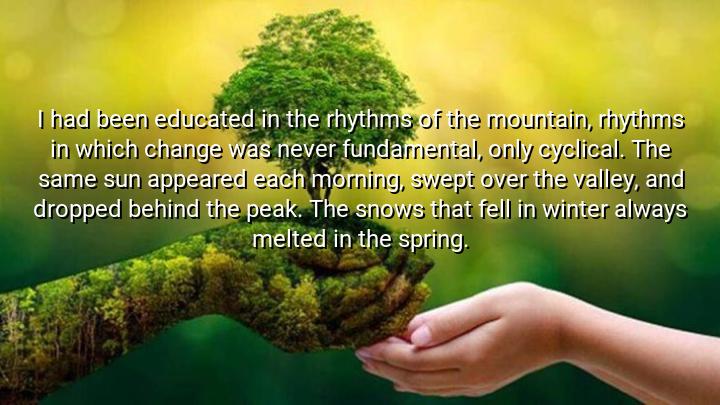




The quote "I had been educated in the rhythms of the mountain, rhythms in which change was never fundamental, only cyclical. The same sun appeared each morning, swept over the valley, and dropped behind the peak. The snows that fell in winter always melted in the spring." by Tara Westover reflects a deep understanding of nature's cycles and the perception of change as a repeating, predictable pattern rather than a radical transformation. Westover emphasizes the steady, reliable rhythms of the natural world—day following night, winter giving way to spring—that create a sense of continuity and stability.
Tara Westover, known for her memoir about growing up in a strict and isolated environment, often explores themes of learning, growth, and personal transformation. This quote reveals her early worldview shaped by living close to nature, where change is seen not as disruptive but as part of a larger, ongoing cycle. This cyclical perspective contrasts with more modern or urban ideas of change as something sudden or revolutionary.
The origin of the quote lies in Westover’s reflection on her upbringing in the mountains of Idaho, where life was deeply connected to the natural environment and its seasons. This background informed her initial understanding of the world before she encountered new ideas about personal and societal change through education and experience. The quote beautifully captures the natural order that framed her early life.
In summary, Westover’s statement highlights the distinction between cyclical change—natural, predictable, and ongoing—and fundamental change, which is often unexpected and transformative. It invites readers to appreciate the rhythms of nature as a metaphor for understanding change in life, while also hinting at the personal evolution that comes from stepping beyond those familiar cycles.

AAdministratorAdministrator
Welcome, honored guests. Please leave a comment, we will respond soon