

I don't think people change; electronics change, the things we have change, but the way we live doesn't change.
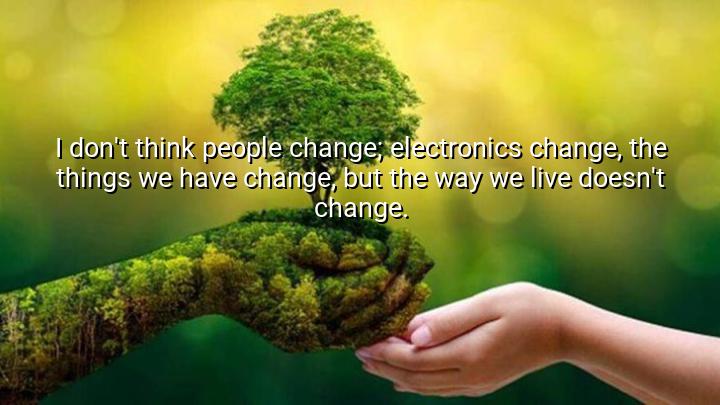




This quote by Judy Blume, "I don't think people change; electronics change, the things we have change, but the way we live doesn't change," offers a thoughtful reflection on the consistency of human nature despite rapid technological advancements. Blume suggests that while electronics and material objects continue to evolve, the core aspects of how people live, relate, and experience life remain relatively constant. Her words imply that human emotions, relationships, and daily struggles are timeless, even in a world driven by constant innovation.
By pointing out the difference between external change and internal constancy, Blume draws attention to the enduring nature of the human condition. While we may now communicate through smartphones instead of handwritten letters or shop online instead of in-person, the underlying desires—for connection, security, love, and purpose—have not changed. Her statement serves as a reminder that technology may alter our habits, but not necessarily our values or needs.
Judy Blume, a celebrated American author, is best known for her novels that explore adolescence, identity, and emotional development. Her stories often delve into the internal worlds of young people, which perhaps shapes her view that people themselves remain consistent, even as the world around them transforms. This quote likely stems from interviews or writings in which she reflects on how society—and especially youth—navigate an ever-changing cultural landscape.
Ultimately, Blume’s quote invites us to focus on the universal aspects of human life. It reminds us that while gadgets and tools evolve, the essence of what it means to be human—our hopes, fears, and dreams—stays the same. In a fast-paced digital age, her insight offers a grounding perspective on the unchanging rhythms of life.

AAdministratorAdministrator
Welcome, honored guests. Please leave a comment, we will respond soon