

I don't think it's possible to touch people's imagination today by aesthetic means.
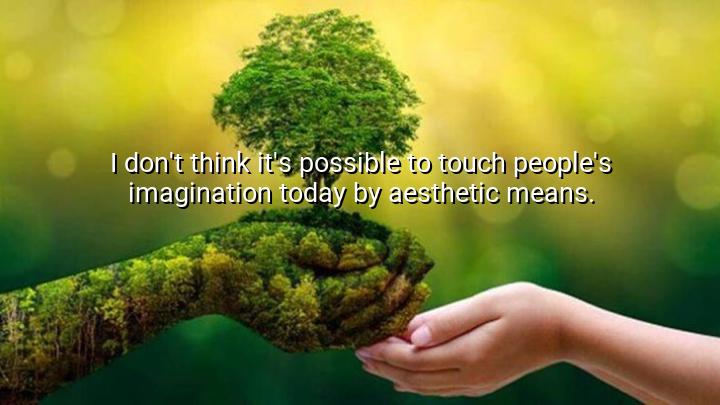




The quote "I don't think it's possible to touch people's imagination today by aesthetic means" by J. G. Ballard reflects his skepticism about the power of traditional artistic methods to engage contemporary audiences. Ballard, a renowned author and visionary in the science fiction genre, suggests that the modern world, shaped by rapid technological advancement and changing social dynamics, has altered the way people relate to art and creativity. He implies that the aesthetic approaches, which historically appealed to the emotions and imagination through beauty and form, no longer have the same impact in today’s culture.
By stating that it’s no longer possible to "touch people's imagination," Ballard may be referring to the idea that in a world flooded with constant stimulation and distractions, traditional aesthetic experiences—such as paintings, classical music, or literature—are less able to provoke deep, imaginative responses. The power of art to evoke wonder or contemplation might be diluted by the overwhelming presence of media, technology, and the speed of modern life. As a result, imagination is no longer captured in the same way it once was.
Ballard’s statement suggests a shift in how art and creativity are perceived in the digital age. The aesthetic experience that once served to inspire and challenge the imagination may be increasingly overshadowed by more immediate or immersive forms of entertainment, such as digital media or virtual reality. This reflects his belief that the role of art in sparking profound emotional or intellectual responses has been diminished in an era dominated by technology and instant gratification.
Ultimately, Ballard’s quote challenges the traditional notion that aesthetic experiences are the primary means through which we engage our imagination. He implies that, in a rapidly evolving world, artists must adapt to new methods of capturing attention and provoking thought. The quote speaks to the tension between the enduring value of art and the changing nature of cultural engagement in the modern world.

AAdministratorAdministrator
Welcome, honored guests. Please leave a comment, we will respond soon