

I come from a poor family, I have seen poverty. The poor need respect, and it begins with cleanliness.
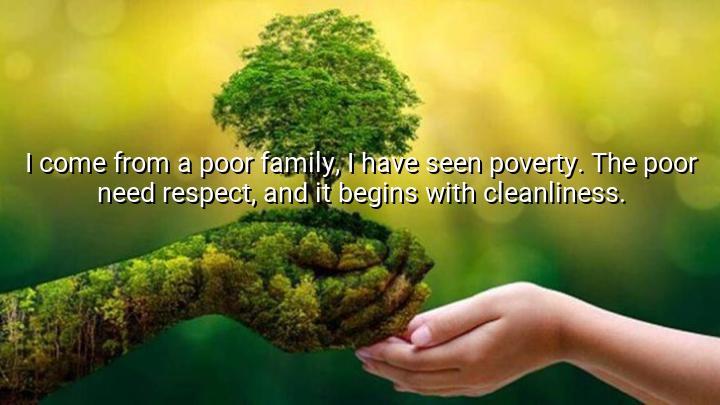




The quote "I come from a poor family, I have seen poverty. The poor need respect, and it begins with cleanliness" by Narendra Modi emphasizes the importance of respecting the poor and addressing their basic needs with dignity. As the Prime Minister of India, Modi draws from his own experience growing up in poverty to highlight that poverty should never strip individuals of their human dignity. He believes that the path to restoring dignity begins with basic actions such as cleanliness, which serves as a symbol of respect for oneself and others. In his view, cleanliness is not just about physical hygiene, but also about showing that people, regardless of their economic status, deserve to live in an environment that values their well-being.
Modi's words suggest that cleanliness is a powerful tool in promoting self-respect and community pride among the poor. By improving their surroundings and living conditions, individuals can begin to feel more empowered and valued. This is particularly relevant in Modi's Swachh Bharat Abhiyan (Clean India Mission), a nationwide campaign he launched to improve sanitation, cleanliness, and public health in India. The campaign stresses that cleanliness is integral not only to health but also to social equity, as it reflects how a society treats its most vulnerable members.
The origin of this quote is deeply rooted in Modi's own life experiences and his work as a public leader. Growing up in humble circumstances, he experienced firsthand the challenges of poverty and its impact on a person's self-esteem. His focus on cleanliness stems from his belief that improving the environment and living conditions of the poor is one of the first steps toward uplifting them and granting them the respect they deserve. Through his policies and personal beliefs, Modi has consistently promoted the idea that small changes in daily life, such as maintaining cleanliness, can have a profound impact on the lives of the poor.
In essence, Modi’s quote serves as a call to action, urging society to not only recognize the struggles of the poor but to respect them by providing the basics of cleanliness and dignity. It suggests that respect for the poor begins with simple acts that promote a sense of worth and equality. By elevating the living conditions of those in poverty, society can begin to dismantle the barriers that perpetuate social and economic inequality.

AAdministratorAdministrator
Welcome, honored guests. Please leave a comment, we will respond soon