

Even after Independence, we have had to face the poison of casteism and communalism. How long these evils will continue? Whom does it benefit?
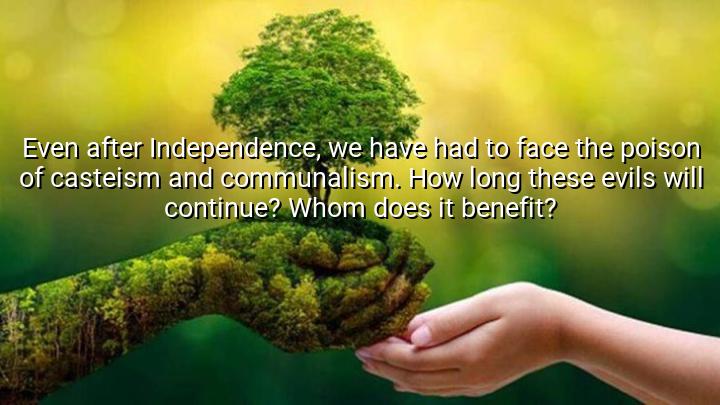




Narendra Modi’s quote addresses the persistent issues of casteism and communalism in India, despite the country achieving Independence. He reflects on the enduring social challenges that continue to plague India, even after it broke free from colonial rule. By referring to casteism and communalism as "poison," Modi emphasizes the harmful, divisive nature of these practices that continue to hinder social harmony and national progress.
Modi’s question, “How long these evils will continue?” reflects his frustration and concern over the deep-rooted social issues that have persisted post-independence. His inquiry suggests a sense of urgency in addressing these problems, pointing out that such divisions stand in the way of unity and development in India. It underscores the idea that social divisions based on caste and religion are not just morally wrong, but they also hold back the nation’s growth.
The second part of the quote, “Whom does it benefit?,” questions who gains from the continuation of these evils. Modi implies that the perpetuation of casteism and communalism serves the interests of certain groups that benefit from maintaining divisions among the people. This statement calls attention to the political and social manipulations that may exploit such divisions for power and influence, ultimately harming the country as a whole.
Ultimately, Modi’s quote highlights the challenges that India faces in achieving true unity and progress despite gaining freedom from colonial rule. He stresses that casteism and communalism remain significant barriers to a more equitable and inclusive society, and questions how long these divisive forces will continue to impede the nation's growth.

AAdministratorAdministrator
Welcome, honored guests. Please leave a comment, we will respond soon