

I am not a snowflake. I am not a sweet, infantilising symbol of fragility and life. I am a strong, fierce, flawed adult woman. I plan to remain that way, in life and in death.
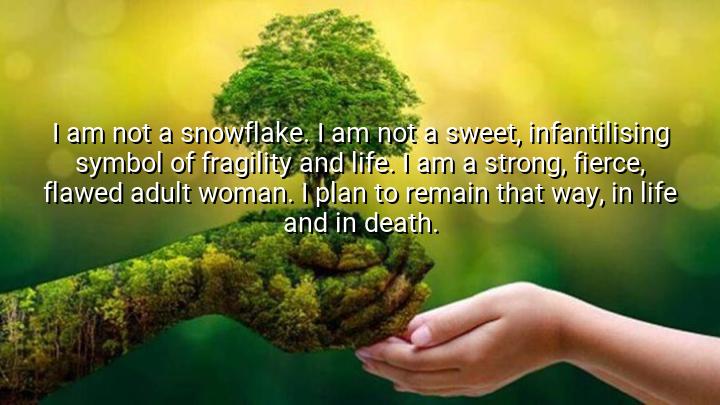




The quote "I am not a snowflake. I am not a sweet, infantilising symbol of fragility and life. I am a strong, fierce, flawed adult woman. I plan to remain that way, in life and in death." by Stella Young expresses a powerful declaration of strength and self-empowerment. Young, a disability advocate and comedian, rejects the notion that individuals with disabilities should be seen as weak, fragile, or helpless. She challenges the stereotypical image of people with disabilities as helpless or in need of constant protection, asserting instead that she is a strong, fierce, and independent woman.
Young’s words emphasize the importance of recognizing the complexity and full humanity of individuals, particularly those with disabilities. By describing herself as "flawed" but still strong, she rejects the tendency to infantilize or over-simplify people's identities. Her statement is a call for others to see her and others like her as whole people—capable of strength, resilience, and autonomy—rather than reducing them to one-dimensional stereotypes. The declaration that she will remain this way "in life and in death" further underscores her commitment to maintaining this self-perception and agency throughout her entire existence.
The origin of this quote comes from Stella Young, an Australian comedian, writer, and disability advocate, who was known for her wit and outspoken stance on issues related to disability and inclusion. Young often spoke about the importance of recognizing the full humanity of people with disabilities, highlighting how society tends to diminish or pity individuals based on their conditions. Through her comedy and advocacy, she sought to challenge and redefine these limiting perceptions.
Ultimately, Young’s quote is a declaration of self-respect and autonomy, urging people to see beyond superficial labels and appreciate the strength and resilience that come with being a human being, regardless of disability. Her words call for a more inclusive and empowering approach to how society views individuals, especially those with disabilities, recognizing their complexity and full range of capabilities.

AAdministratorAdministrator
Welcome, honored guests. Please leave a comment, we will respond soon