

I am become death, the destroyer of worlds.
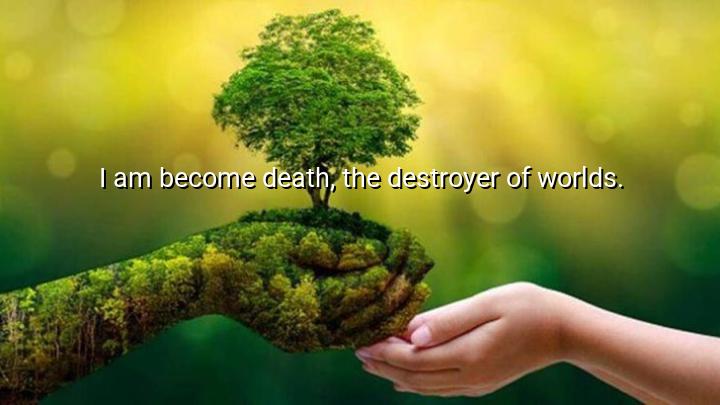




The quote "I am become death, the destroyer of worlds" was famously spoken by J. Robert Oppenheimer, the American physicist and scientific director of the Manhattan Project, which developed the first atomic bomb during World War II. Oppenheimer recalled this line from the Bhagavad Gita, an ancient Hindu scripture, upon witnessing the first successful test of the atomic bomb in 1945. The line is spoken by the god Krishna, who reveals his universal form to the warrior Arjuna, symbolizing the destructive power of creation and destruction.
Oppenheimer's use of this quote reflects his deep sense of awe and horror at the devastating power of the bomb he had helped create. By invoking the words of Krishna, he acknowledges the monumental and potentially catastrophic consequences of his work. In a sense, Oppenheimer is confronting the moral implications of the bomb, recognizing that he had become an instrument of death on an unprecedented scale, capable of destroying entire cities and altering the course of human history.
The quote also speaks to the duality of science and human progress. While the creation of the atomic bomb was a scientific achievement, it also marked a significant moment of ethical reckoning for Oppenheimer and the scientific community. The quote highlights the tension between human innovation and the potential for destruction, a theme that would continue to haunt Oppenheimer throughout his life. His reference to the destroyer of worlds captures the complex feelings of responsibility and regret that came with the development of such powerful weapons.
Ultimately, Oppenheimer’s words serve as a reminder of the profound consequences of scientific discovery and the need for careful ethical consideration. His use of a sacred text to describe the bomb's power underscores the tragic realization that human progress, while capable of incredible feats, can also bring about immense harm when placed in the wrong hands or used without regard for its destructive potential.

AAdministratorAdministrator
Welcome, honored guests. Please leave a comment, we will respond soon