

Human history becomes more and more a race between education and catastrophe.
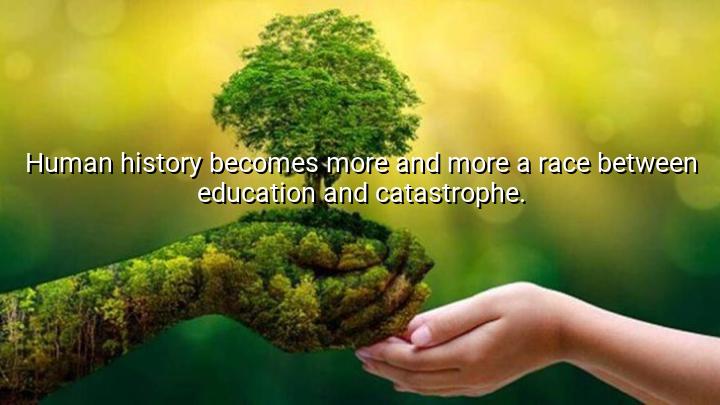




In this quote, H. G. Wells reflects on the precarious balance between education and catastrophe in the progress of human history. He suggests that humanity’s future hinges on whether we can advance knowledge, understanding, and wisdom through education fast enough to prevent the disastrous consequences of our own mistakes. Education represents humanity’s best hope for solving problems, promoting peace, and ensuring survival, while catastrophe refers to the potential dangers—such as war, environmental collapse, or technological misuse—that could result from failing to learn from the past.
Wells’ quote implies that as humanity's power grows—through advances in science, technology, and global influence—so too does the potential for self-destruction. Without proper education, there is a risk that humanity will misuse its knowledge and capabilities, leading to conflict, environmental degradation, or other forms of catastrophe. The race between these two forces reflects the urgency of addressing global challenges through learning and communication to avert a tragic outcome.
The origin of this quote can be tied to H. G. Wells' concerns as a writer and thinker during a time of rapid technological and social change. Writing in the late 19th and early 20th centuries, Wells witnessed the industrial revolution, the rise of imperialism, and the devastating effects of the World Wars. These historical events fueled his belief that while human progress could be remarkable, it also carried inherent dangers. Wells was a proponent of education and social reform, believing that knowledge was essential for solving the problems created by modern life.
Ultimately, Wells’ statement serves as a reminder of the profound responsibility humanity has in shaping its future. Education must keep pace with the challenges posed by our growing capabilities, ensuring that we are equipped to handle the complexities of the modern world. The quote calls for an ongoing commitment to learning, fostering understanding, and avoiding the traps of ignorance and destruction that could otherwise undo the progress we've made.

AAdministratorAdministrator
Welcome, honored guests. Please leave a comment, we will respond soon