

Affliction comes to us, not to make us sad but sober; not to make us sorry but wise.
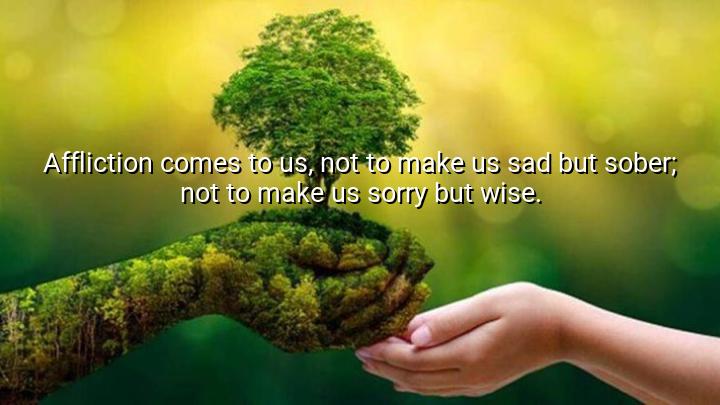




H.G. Wells’ quote, "Affliction comes to us, not to make us sad but sober; not to make us sorry but wise," suggests that suffering or hardship is not merely a source of sorrow, but a catalyst for personal growth and maturity. The word "affliction" refers to any kind of difficulty, pain, or adversity that one might face. Wells emphasizes that such experiences are not meant to simply make us feel sad or regretful, but rather to encourage a more serious, thoughtful outlook on life. Affliction serves as a wake-up call, forcing us to confront realities and come to terms with the complexities of life.
By saying "not to make us sorry but wise," Wells challenges the conventional view of suffering as a purely negative experience. Rather than leaving us in a state of despair or self-pity, hardship, in his view, has the potential to make us wiser—helping us to better understand ourselves, others, and the world around us. The wisdom gained through such struggles is not just intellectual, but also emotional and spiritual, allowing for a deeper appreciation of life’s challenges and opportunities.
The origin of this quote can be traced to Wells’ broader philosophical and literary work, where he often explored human nature and the impact of adversity. Wells, as a writer, was deeply interested in the forces that shape human development, including suffering. His idea that affliction can lead to wisdom resonates with the broader philosophical tradition that sees hardship as an essential part of the human experience, one that refines character and fosters growth.
In essence, this quote redefines the purpose of suffering, urging us to view it not as something to be avoided or mourned, but as a powerful teacher. Wells suggests that the pain and challenges we endure are opportunities for self-reflection and maturity, ultimately guiding us toward greater clarity and understanding of the world.

AAdministratorAdministrator
Welcome, honored guests. Please leave a comment, we will respond soon