

How one handles success or failure is determined by their early childhood.
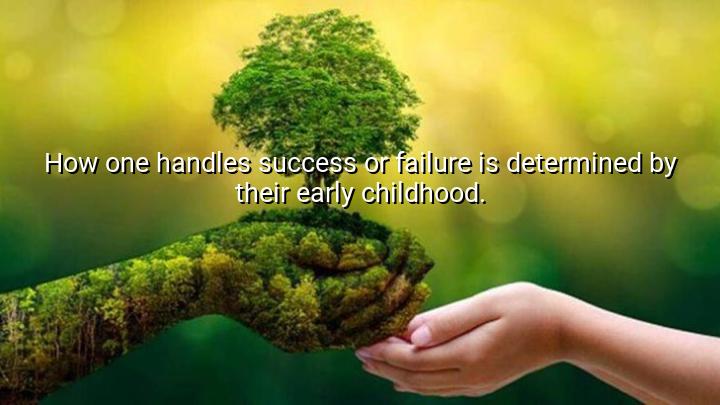




In this quote, Harold Ramis, the acclaimed American actor, comedian, and filmmaker, suggests that a person's ability to handle success or failure is shaped by their early childhood experiences. He implies that the way individuals are raised, the lessons they learn, and the emotional tools they develop during these formative years play a crucial role in how they approach challenges later in life. This reflects the idea that our early environment significantly influences our emotional resilience and coping mechanisms.
Ramis' statement highlights the psychological and emotional foundation built during childhood. How children are taught to deal with adversity, whether they are encouraged to embrace failure as a learning experience or to fear mistakes, can deeply affect their mindset in adulthood. This perspective emphasizes that our responses to both triumphs and setbacks are not just innate but are often learned and shaped by those around us during our upbringing.
The quote also touches on the concept of parental influence and the impact of early socialization. For example, children who grow up in environments where they are supported, encouraged to take risks, and taught that failure is part of success may grow up more confident and resilient. On the other hand, those who experience a lack of support or harsh criticism may struggle more with self-esteem and fear of failure.
Ultimately, Harold Ramis' quote underscores the profound impact of early childhood on a person's emotional and psychological approach to life. It suggests that how one manages the highs and lows of life—whether success or failure—is a reflection of the lessons and emotional coping strategies learned in the early years, which continue to shape their behavior throughout life.

AAdministratorAdministrator
Welcome, honored guests. Please leave a comment, we will respond soon