

How is it possible that a being with such sensitive jewels as the eyes, such enchanted musical instruments as the ears, and such fabulous arabesque of nerves as the brain can experience itself anything less than a god.
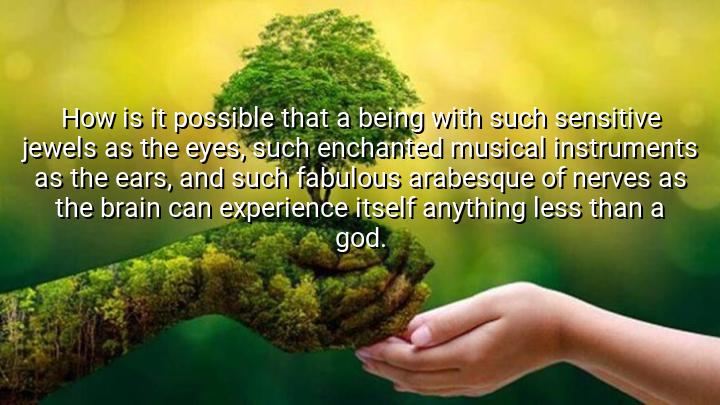




The quote by Alan Watts, "How is it possible that a being with such sensitive jewels as the eyes, such enchanted musical instruments as the ears, and such fabulous arabesque of nerves as the brain can experience itself anything less than a god," explores the remarkable complexity and beauty of the human body and mind. Watts, a philosopher known for his work in Eastern philosophy and spirituality, marvels at the intricate design of human senses and consciousness, comparing them to divine qualities. The metaphorical language he uses, describing the eyes as "sensitive jewels" and the ears as "enchanted musical instruments," highlights the extraordinary perception and sensory experiences that humans possess.
Watts is emphasizing that the human body and mind, with its highly developed sensory organs and nervous system, are capable of experiencing the world in a deeply profound and divine way. He implies that such intricate and harmonious design should lead one to recognize the sacredness of existence and the remarkable nature of human experience. Rather than feeling insignificant or disconnected, Watts suggests that we should view ourselves as possessing a sort of god-like awareness, due to the miraculous complexity of our own biology and consciousness.
The quote also reflects Watts' broader philosophical view, which often incorporated Eastern concepts of interconnectedness, spirituality, and the recognition of the divine within all aspects of existence. He believed that people should see themselves not as separate from the world, but as integral parts of a greater, universal whole. By drawing attention to the human body's wonder, Watts encourages a deeper sense of self-awareness and appreciation for the extraordinary faculties we possess.
Ultimately, Watts is advocating for a shift in perspective, urging us to recognize the divinity in the natural, sensory experiences of life. By acknowledging the beauty and complexity of the human body and mind, we are invited to see ourselves as part of something much greater, rather than feeling disconnected or insignificant. This quote encourages us to embrace the sacredness of human experience and to feel awe and reverence for the natural world and our place within it.

AAdministratorAdministrator
Welcome, honored guests. Please leave a comment, we will respond soon