

Happiness is the natural flower of duty.
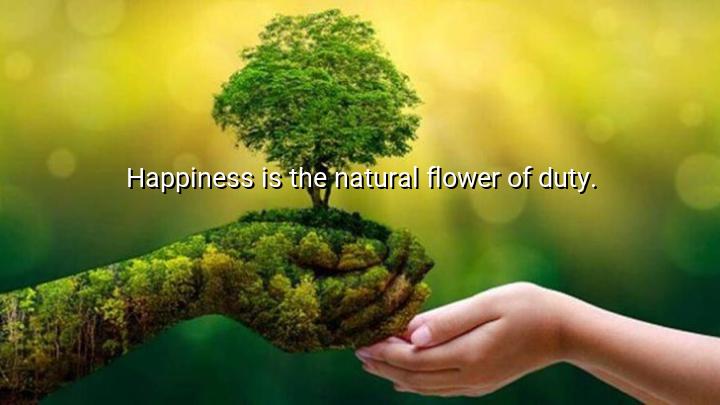




In this quote, Phillips Brooks, an American Episcopal bishop and preacher, suggests that happiness is a natural result of fulfilling one’s duty. Brooks implies that true joy and contentment come not from chasing personal pleasures or external rewards, but from living in alignment with one’s responsibilities and commitments. The metaphor of happiness as a flower reflects the idea that when we focus on doing our duty—whether to our family, work, or society—happiness will naturally bloom from within, like a flower emerging from the ground.
Brooks' perspective emphasizes the fulfillment that comes from selflessness and dedication. By focusing on our obligations and contributing positively to the world around us, we find a sense of satisfaction that transcends temporary pleasures. This quote suggests that when we prioritize responsibility over indulgence, we experience a deeper and more lasting form of happiness—one that arises from knowing we have acted with integrity and purpose.
The origin of this quote is rooted in Brooks’ Christian faith and his views on living a moral and purposeful life. As a prominent preacher, he often spoke about the connection between duty, virtue, and spiritual growth. This quote is consistent with his belief that living a life focused on duty and service leads to greater fulfillment than pursuing individual desires alone. Brooks believed that in fulfilling our duties, we align ourselves with a higher purpose, which leads to lasting peace and joy.
Ultimately, Brooks’ message encourages us to find happiness not in seeking personal gain, but in living with purpose and fulfilling our responsibilities. The connection between duty and happiness suggests that a meaningful life is one in which we actively contribute to the well-being of others and society, and in doing so, we experience the natural reward of inner contentment.

AAdministratorAdministrator
Welcome, honored guests. Please leave a comment, we will respond soon