

To say, 'well done' to any bit of good work is to take hold of the powers which have made the effort and strengthen them beyond our knowledge.
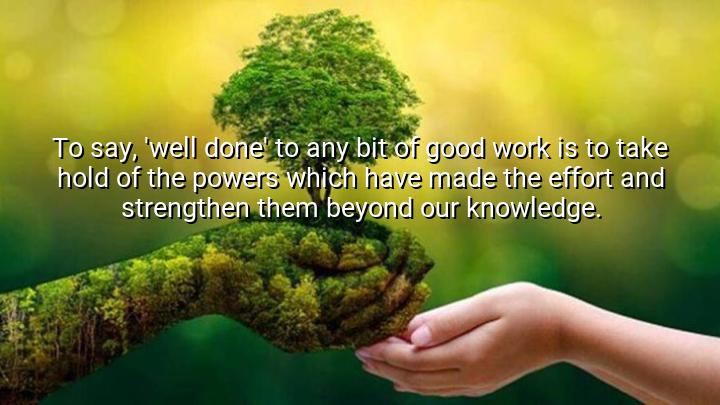




The quote by Phillips Brooks, "To say, 'well done' to any bit of good work is to take hold of the powers which have made the effort and strengthen them beyond our knowledge," emphasizes the profound impact of recognition and encouragement. Brooks suggests that acknowledging someone’s hard work not only validates their effort but also enhances the underlying abilities and motivation that contributed to the achievement, often in ways that surpass what we can fully understand.
By highlighting the connection between praise and the powers behind an effort, Brooks underscores the transformative nature of positive reinforcement. Recognition acts as a catalyst, empowering individuals to continue developing their skills, creativity, and determination. It reflects the idea that even small gestures of acknowledgment can have far-reaching effects on personal growth and achievement.
The origin of this quote comes from Brooks’ work as an American clergyman and preacher in the 19th century, known for his inspirational sermons and writings. He frequently explored themes of moral responsibility, encouragement, and the influence of human action, emphasizing the unseen spiritual and psychological effects of supporting others.
Ultimately, Brooks’ statement conveys that giving credit and expressing appreciation is more than a social nicety—it is a way to nurture and amplify the powers behind effort. It highlights the moral and practical value of encouragement, suggesting that our acknowledgment can significantly shape others’ capacity for success and personal growth.

AAdministratorAdministrator
Welcome, honored guests. Please leave a comment, we will respond soon