

Happiness is the absence of the striving for happiness.
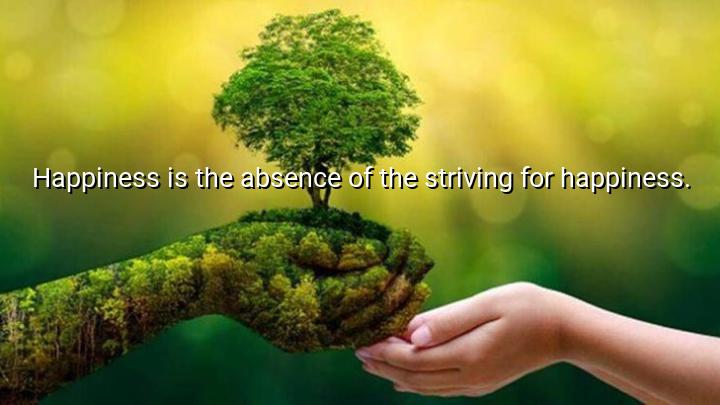




In this quote, Zhuangzi, an influential Chinese philosopher, presents a paradoxical view on happiness. He suggests that true happiness comes not from actively pursuing it, but from the absence of the striving for it. According to Zhuangzi, the more we chase happiness or focus on attaining it, the more elusive it becomes. The effort and attachment to the idea of happiness can prevent us from actually experiencing it. True contentment, therefore, is found in a state of acceptance and natural flow, where we are not fixated on the idea of happiness but rather living fully in the present.
Zhuangzi’s perspective is rooted in Taoism, which emphasizes the importance of living in accordance with the Tao (the natural way of the universe) and simplicity. The Taoist philosophy teaches that when we stop struggling against the natural flow of life, we can find peace and happiness. Instead of constantly striving for happiness through external achievements or possessions, happiness is a byproduct of being in harmony with the world and ourselves.
The quote also suggests that attachment to happiness can create frustration and discontent. The pursuit of happiness, especially when it is seen as a goal to be achieved, often leads to stress, anxiety, and dissatisfaction. Zhuangzi implies that by letting go of the constant desire for happiness, we can experience a deeper, more lasting sense of contentment that comes from living authentically and embracing the present moment without expectation.
Ultimately, Zhuangzi’s words offer a wisdom that challenges conventional views on happiness. Rather than chasing after it, he advocates for a more passive and accepting approach, where happiness arises naturally when we stop forcing it and allow ourselves to be in tune with the flow of life. This philosophy encourages inner peace and balance rather than striving for unattainable external ideals.

AAdministratorAdministrator
Welcome, honored guests. Please leave a comment, we will respond soon