

Happiness is inward, and not outward; and so, it does not depend on what we have, but on what we are.
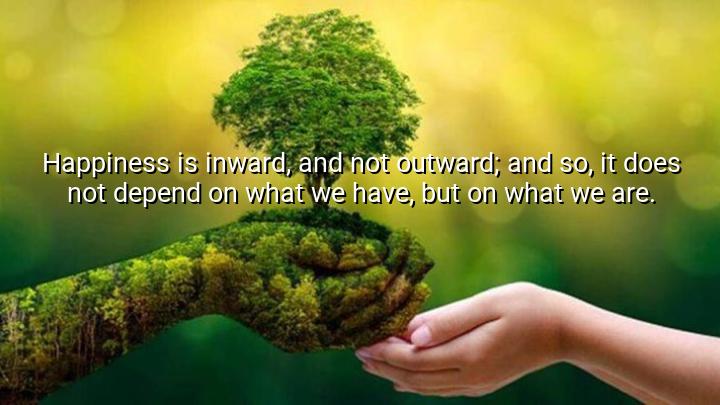




The quote "Happiness is inward, and not outward; and so, it does not depend on what we have, but on what we are." by Henry Van Dyke suggests that happiness is not determined by external circumstances or material possessions, but rather by our internal state and character. Van Dyke emphasizes that true happiness comes from within, and it is rooted in our values, attitude, and how we perceive and respond to life’s challenges. This implies that we cannot rely on external things, such as wealth, status, or achievements, to find lasting happiness.
Van Dyke’s words also reflect the idea that contentment is not something that can be bought or attained through physical possessions. Instead, happiness is about cultivating a positive mindset and a sense of fulfillment that arises from our inner qualities. This view encourages individuals to focus on developing personal growth, emotional resilience, and a sense of purpose, rather than seeking happiness through fleeting or material sources.
The quote suggests that self-awareness and self-acceptance are key to achieving happiness. It invites us to reflect on who we are as people and how our personal attributes—such as kindness, gratitude, and empathy—can shape our experience of life. By focusing on being rather than having, Van Dyke encourages a deeper, more sustainable form of happiness that is not reliant on external validation.
Originating from Van Dyke’s work as a clergyman, author, and poet, the quote reflects his spiritual and philosophical beliefs about the nature of happiness. Throughout his writings, he emphasized the importance of inner peace and moral integrity as the foundations for living a meaningful life. His words serve as a reminder that happiness is something we cultivate within ourselves, not something we seek from the outside world.

AAdministratorAdministrator
Welcome, honored guests. Please leave a comment, we will respond soon