

There is a loftier ambition than merely to stand high in the world. It is to stoop down and lift mankind a little higher.
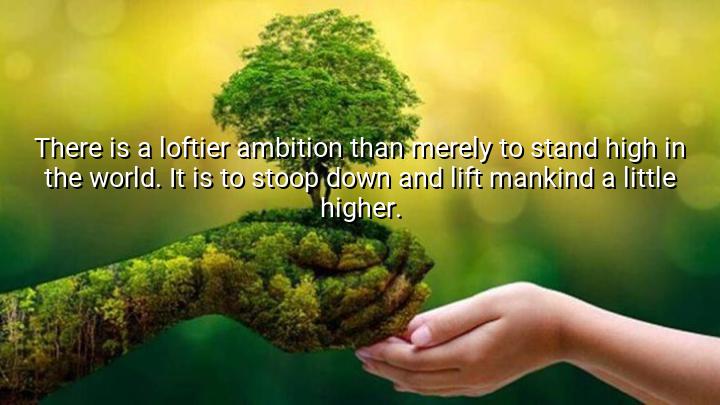




The quote "There is a loftier ambition than merely to stand high in the world. It is to stoop down and lift mankind a little higher" by Henry Van Dyke conveys the idea that true greatness is not about achieving personal success or status but about using one's position to make a positive impact on the lives of others. Van Dyke suggests that the greatest form of ambition is one that seeks to uplift others, rather than simply seeking to rise above them. It's about using one’s influence or resources to help others improve their circumstances and to contribute to the greater good.
Henry Van Dyke, an American clergyman, author, and poet, often wrote about themes of service, compassion, and humanity. This quote reflects his belief in the moral duty of individuals, particularly those in positions of power or privilege, to use their advantages to help others. Van Dyke advocates for a form of leadership that is grounded in humility and generosity, where personal ambition is measured not by how high one can climb, but by how much one can give back to society.
The idea of stooping down emphasizes the act of humility, suggesting that lifting others often requires us to step down from our own pedestal or comfort zone. It’s about recognizing that true leadership is not about elevating oneself, but about using one’s power, influence, or resources to empower those who may not have the same opportunities. This selflessness is what defines the loftiest form of ambition in Van Dyke’s view.
Ultimately, Van Dyke’s message encourages us to look beyond our personal goals and to consider how we can make a difference in the lives of others. The quote challenges us to think of success not in terms of individual achievement, but in terms of the impact we have on the well-being of humanity. It is a call to use our strengths and positions to serve and elevate others, thereby contributing to the collective good of society.

AAdministratorAdministrator
Welcome, honored guests. Please leave a comment, we will respond soon