

Happiness is dependent on self-discipline. We are the biggest obstacles to our own happiness. It is much easier to do battle with society and with others than to fight our own nature.
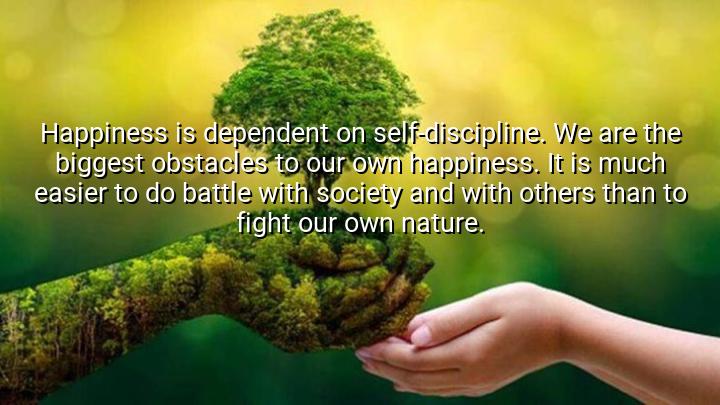




Dennis Prager’s quote emphasizes that happiness is closely tied to self-discipline. He suggests that while many external factors, such as society or other people, can present challenges, the biggest obstacles to happiness often come from within. Prager argues that we are our own greatest impediment to happiness because our desires, impulses, and behaviors can often be at odds with the disciplined actions required to lead fulfilling lives. Essentially, true happiness comes from the ability to master our own nature.
The quote highlights that it is often easier to focus on external conflicts, such as dealing with society or other people, because they are more tangible and separate from us. In contrast, the battle to control our own habits, thoughts, and emotions requires much more introspection and effort. Prager underscores the difficulty of addressing our own internal conflicts, which can feel more complex and entrenched than any challenge posed by the external world.
Dennis Prager, a well-known radio host and writer, frequently discusses themes of personal responsibility and self-improvement. His views on happiness reflect his belief that self-control and self-awareness are crucial for achieving fulfillment. His message encourages individuals to focus on personal growth and discipline as a way to unlock deeper happiness, rather than placing blame on external circumstances or others.
Ultimately, Prager’s quote serves as a reminder that the path to lasting happiness lies not in blaming the world around us, but in taking responsibility for our own actions and decisions. It emphasizes that self-discipline and the ability to manage our inner desires and impulses are key to overcoming the obstacles we create for ourselves.

AAdministratorAdministrator
Welcome, honored guests. Please leave a comment, we will respond soon