

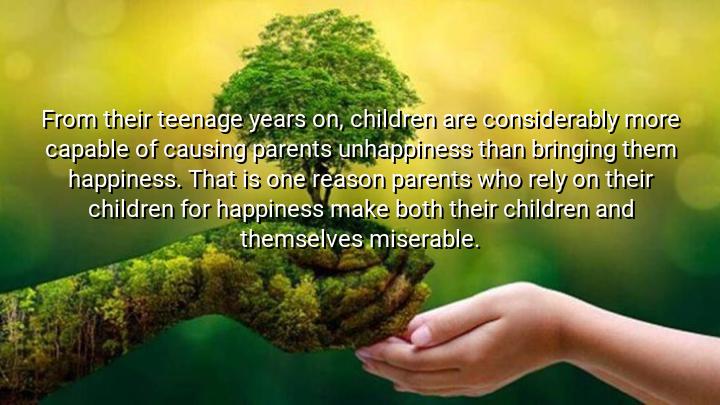
From their teenage years on, children are considerably more capable of causing parents unhappiness than bringing them happiness. That is one reason parents who rely on their children for happiness make both their children and themselves miserable.
From their teenage years on, children
From their teenage years on, children are considerably more capable of causing parents unhappiness than bringing them happiness. That is one reason parents who rely on their children for happiness make both their children and themselves miserable.

From their teenage years on, children
From their teenage years on, children are considerably more capable of causing parents unhappiness than bringing them happiness. That is one reason parents who rely on their children for happiness make both their children and themselves miserable.
From their teenage years on, children
From their teenage years on, children are considerably more capable of causing parents unhappiness than bringing them happiness. That is one reason parents who rely on their children for happiness make both their children and themselves miserable.
From their teenage years on, children
From their teenage years on, children are considerably more capable of causing parents unhappiness than bringing them happiness. That is one reason parents who rely on their children for happiness make both their children and themselves miserable.
From their teenage years on, children
From their teenage years on, children are considerably more capable of causing parents unhappiness than bringing them happiness. That is one reason parents who rely on their children for happiness make both their children and themselves miserable.
From their teenage years on, children

The quote by Dennis Prager addresses the complex relationship between parents and children as they grow older. It suggests that as children enter their teenage years, they often become more capable of causing parents unhappiness than providing joy. This shift is attributed to the natural developmental stage where children seek independence and begin to make decisions that may not always align with their parents' expectations or desires.

Prager's statement highlights the emotional dependency that some parents have on their children for happiness. When parents rely too heavily on their children for emotional fulfillment, it can lead to disappointment and frustration. This is because children, especially as they grow older, cannot always meet these emotional expectations, nor should they be burdened with such a responsibility.

The quote also emphasizes the idea that parents should not expect their children to be their primary source of happiness. When they do, it can create a cycle of misery for both parties, as the children's natural desire for independence conflicts with the parents' emotional needs. This interdependence can cause strain and hinder the development of a healthy, balanced relationship between parents and children.

Ultimately, Prager's message encourages parents to seek happiness and fulfillment outside of their children. It suggests that cultivating personal happiness through other aspects of life, such as relationships, personal growth, or passions, can lead to a more positive and harmonious dynamic within the family.

Dennis Prager
Dennis Prager

American - Journalist Born: August 2, 1948

Have 0 Comment From their teenage years on, children

AAdministratorAdministrator

Welcome, honored guests. Please leave a comment, we will respond soon

Reply.
Information sender
Leave the question
Click here to rate
Information sender
0.14733 sec| 2560.688 kb