

God is an unutterable sigh, planted in the depths of the soul.
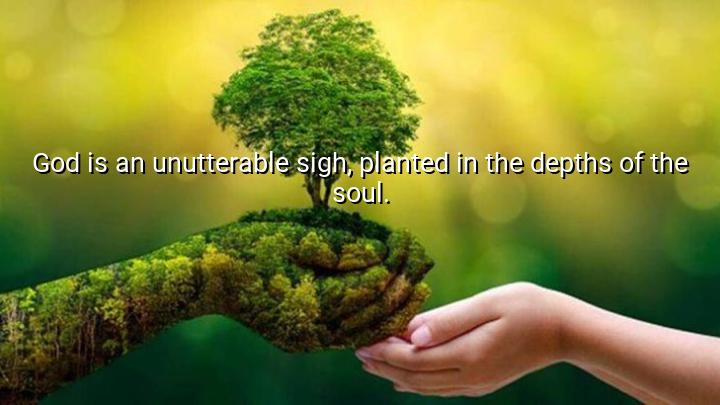




The quote "God is an unutterable sigh, planted in the depths of the soul" by Jean Paul reflects a deeply spiritual and philosophical understanding of God as something both profoundly present and ineffable. Jean Paul is suggesting that the experience of God transcends words and human expression, existing as a deep, inward longing or yearning within the soul. The term "unutterable" implies that God’s essence cannot be fully captured or articulated by language; it is something beyond what we can express, yet it is felt deeply within us as a kind of spiritual yearning or desire.
In this view, God is not only an external or distant force, but something embedded in the very core of human existence, influencing our inner lives and thoughts. The "sigh" metaphor indicates a feeling of yearning or longing, suggesting that the human soul is in a constant state of reaching toward something greater, something divine. This longing, though unutterable, reflects a profound connection between humanity and the divine, even if that connection cannot be fully understood or articulated.
The origin of this quote comes from Jean Paul, a German Romantic writer and philosopher known for his exploration of deep emotional and philosophical themes. In his works, he often delved into the nature of God, humanity, and the complexities of the soul. His writing is marked by a blend of mysticism, emotional depth, and a recognition of the limitations of language in describing spiritual realities. This quote exemplifies his belief in the ineffable nature of God and the inner spiritual experience that transcends human expression.
Ultimately, Jean Paul’s quote emphasizes the mysterious and intimate relationship between the divine and the soul. It encourages a recognition that God is deeply embedded within the human heart and spirit, but that this connection, while powerful, cannot be fully expressed through words. The "unutterable sigh" invites individuals to embrace their longing for the divine, recognizing that it is a profound, inexpressible part of their inner being.

AAdministratorAdministrator
Welcome, honored guests. Please leave a comment, we will respond soon