

For tis not in mere death that men die most.
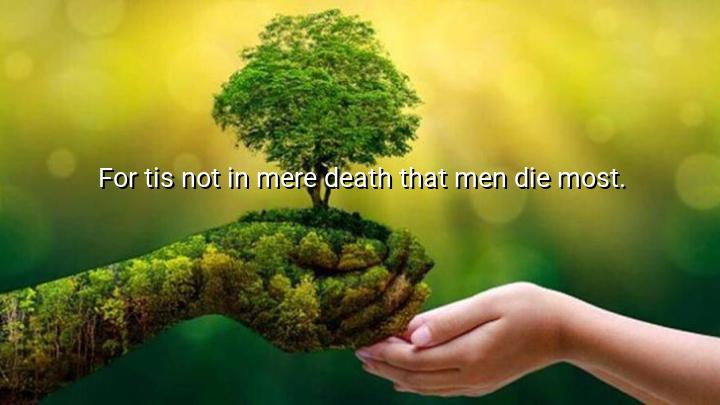




In this quote, Elizabeth Barrett Browning suggests that death is not the only way in which people experience the end of their existence. She implies that people die in many ways long before their physical death occurs. The line hints at the idea that individuals can suffer from spiritual death, emotional disconnection, or the loss of purpose, which can make them feel as though they are no longer truly alive, even if their physical bodies persist. These forms of death are often more subtle and enduring, affecting the soul or heart long before the final moment.
Browning’s words reflect a broader theme about the fragility of the human spirit. She suggests that loss of hope, disillusionment, or a lack of connection to life can diminish a person’s vitality in ways more profound than mere physical death. It speaks to the idea that one can feel dead on the inside due to suffering, emotional hardship, or a lack of meaning—experiences that can drain a person’s sense of self even while they remain alive.
The quote also highlights the distinction between physical death, which is inevitable and external, and internal death, which may be caused by life’s circumstances, such as despair, alienation, or a lack of love. Browning emphasizes that while physical death marks the end of life, the deterioration of one’s inner vitality can be a form of death that happens in stages, often unnoticed by others. This could be interpreted as a commentary on the importance of maintaining inner strength and purpose throughout one’s life.
Originating from Elizabeth Barrett Browning, a Victorian poet known for her works on love, loss, and the complexities of human emotions, this quote encapsulates her deep understanding of the emotional and spiritual aspects of human existence. Browning often explored themes of suffering and resilience, and through this quote, she encourages reflection on the deeper aspects of life, urging people to be mindful of the internal forces that sustain or diminish life beyond mere physical survival.

AAdministratorAdministrator
Welcome, honored guests. Please leave a comment, we will respond soon