

For the poison of hatred seated near the heart doubles the burden for the one who suffers the disease; he is burdened with his own sorrow, and groans on seeing another's happiness.
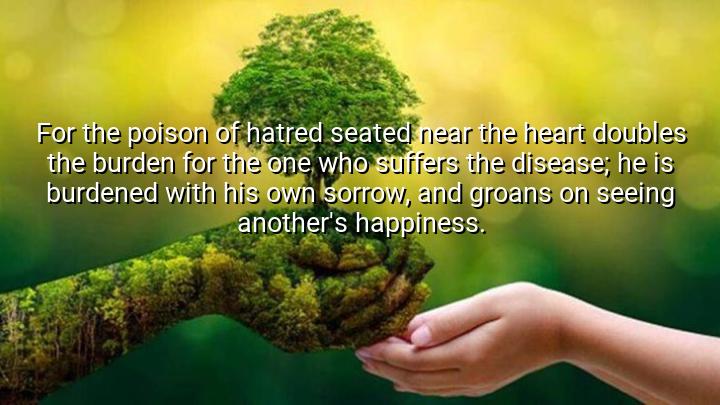




The quote by Aeschylus, "For the poison of hatred seated near the heart doubles the burden for the one who suffers the disease; he is burdened with his own sorrow, and groans on seeing another's happiness," explores the destructive nature of hatred and its impact on the person who harbors it. Aeschylus compares hatred to a poison that corrupts the heart, emphasizing how it intensifies one's own suffering. When we carry hatred within us, it not only adds to our own emotional burdens but also prevents us from experiencing joy or contentment, as we are consumed by the misery of our negative feelings.
Aeschylus suggests that hatred doesn't only harm the individual by deepening their own sorrow, but also causes them to feel resentful or envious when they witness the happiness of others. Instead of sharing in the joy of those around them, the person filled with hatred feels a sense of bitterness or frustration, which only compounds their emotional pain. This creates a vicious cycle where their inability to find peace in others' happiness further isolates and burdens them.
The quote also highlights the idea that hatred is not just an external force but an internal one that grows and festers within the person who harbors it. The groans mentioned in the quote represent the inner turmoil and constant discomfort caused by allowing hatred to govern one’s emotions. Aeschylus illustrates that this emotional affliction, left unchecked, can prevent personal growth and healing, keeping the individual trapped in a state of misery and resentment.
The origin of the quote is rooted in Aeschylus' deep understanding of the human condition as seen in his works, particularly in his tragedies. Known as one of the three ancient Greek tragedians, Aeschylus often explored themes of justice, revenge, and the psychological effects of powerful emotions. This quote, like many of his writings, reflects his belief in the importance of overcoming negative emotions like hatred in order to achieve personal peace and emotional balance.

AAdministratorAdministrator
Welcome, honored guests. Please leave a comment, we will respond soon