

Justice turns the scale, bringing to some learning through suffering.
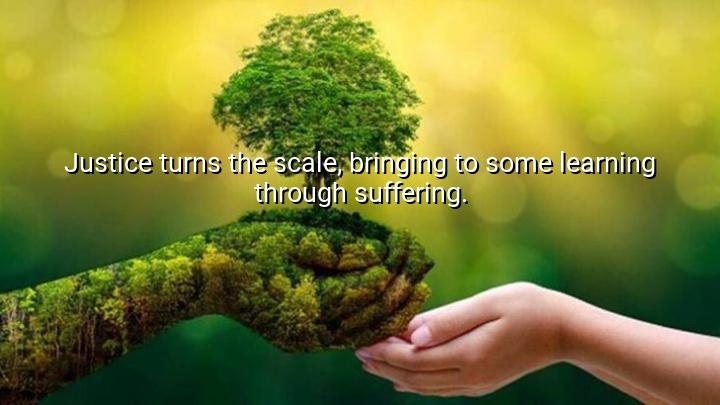




The quote by Aeschylus, “Justice turns the scale, bringing to some learning through suffering,” reflects the ancient Greek understanding of morality, accountability, and human experience. Aeschylus, often called the father of Greek tragedy, frequently explored themes of fate, divine law, and the consequences of human actions. Here, he conveys that justice is an active force that balances actions and outcomes, ensuring that wrongdoing or negligence leads to lessons often learned through adversity.
By stating that some acquire learning through suffering, Aeschylus highlights a recurring motif in Greek tragedy: personal growth and wisdom often emerge from hardship. This perspective suggests that pain and loss are not merely punitive but are integral to understanding truth, ethics, and the human condition. The “scale” symbolizes the careful weighing of deeds, emphasizing that consequences are neither random nor unfair but structured within a moral universe.
The quote also reflects a belief in the transformative power of experience. In Aeschylus’ plays, characters frequently encounter suffering that forces introspection and fosters maturity or redemption. By linking justice with learning, the quote underscores that ethical and personal development is inseparable from the trials one faces, highlighting the interplay between responsibility and consequence.
Ultimately, Aeschylus’ words serve as a reminder that suffering can be a source of wisdom when framed within the context of justice. They reflect a worldview where moral balance governs life, and human beings are called to gain insight from the challenges imposed by fate or their own actions, reinforcing the timeless connection between adversity and growth.

AAdministratorAdministrator
Welcome, honored guests. Please leave a comment, we will respond soon