

Every evil is a sickness of soul, but virtue offers the cause of its health.
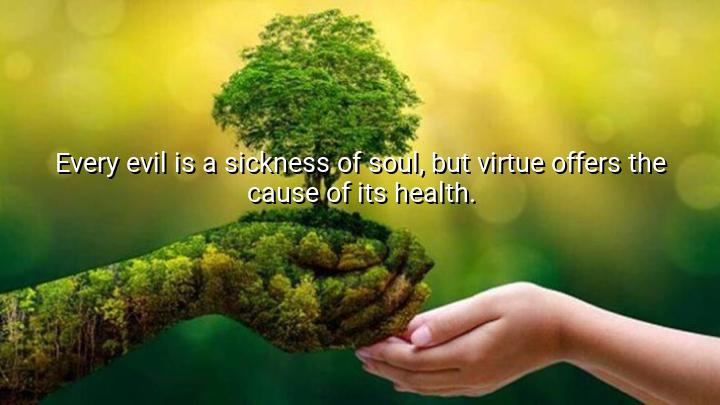




The quote by Saint Basil, "Every evil is a sickness of soul, but virtue offers the cause of its health," highlights the idea that evil or moral wrongdoing stems from a deeper spiritual illness. According to Saint Basil, evil is not just an external action but a sign of a disturbed or unhealthy soul. This perspective suggests that when individuals engage in harmful behaviors, it is often a reflection of internal imbalance, ignorance, or moral decay, rather than merely external circumstances or temptation.
The second part of the quote, "virtue offers the cause of its health," introduces virtue as the antidote to this sickness. Virtue, in this context, refers to qualities like goodness, compassion, integrity, and wisdom, which help restore balance to the soul. Saint Basil implies that by cultivating virtue, individuals can heal the spiritual sickness that leads them to act in evil ways. Virtue provides the moral compass that leads one back to a state of health, both for the individual and for their relationships with others.
This concept aligns with Saint Basil's broader theological views, where he emphasized the importance of moral purity and spiritual growth. He believed that through faith, prayer, and the practice of virtue, individuals could overcome the darkness of evil and find spiritual wholeness. In this framework, the pursuit of virtue is not just a moral obligation but a path toward true health—both of the body and soul.
Originating from Saint Basil, a 4th-century Christian bishop and theologian, the quote reflects his emphasis on the importance of inner spiritual health. Basil, who is known for his contributions to early Christian doctrine, particularly on issues of ethics and community life, believed that true well-being comes from aligning one's actions with divine principles and moral truth. His teachings continue to influence Christian thought on the relationship between virtue, soul health, and moral conduct.

AAdministratorAdministrator
Welcome, honored guests. Please leave a comment, we will respond soon