

A tree is known by its fruit; a man by his deeds. A good deed is never lost; he who sows courtesy reaps friendship, and he who plants kindness gathers love.
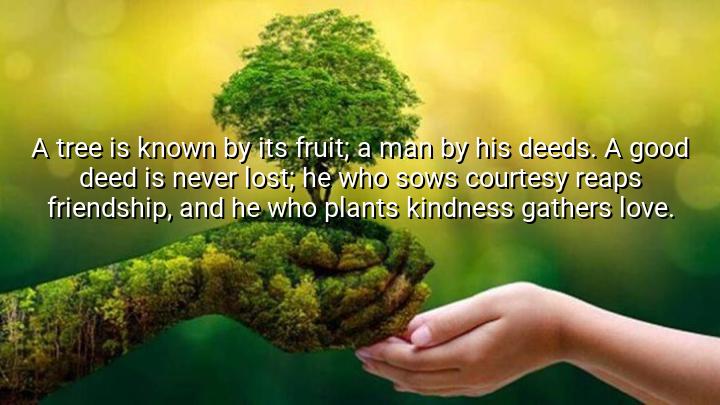




The quote "A tree is known by its fruit; a man by his deeds. A good deed is never lost; he who sows courtesy reaps friendship, and he who plants kindness gathers love" by Saint Basil, an early Christian bishop, emphasizes the idea that a person’s character is revealed through their actions. Just as a tree is recognized by the quality of its fruit, a person’s true nature is known by the deeds they perform. This analogy suggests that our actions define who we are, and the impact we have on others shapes how we are perceived.
Saint Basil goes on to explain that good deeds have lasting value and never go unnoticed. Acts of courtesy and kindness not only benefit others but also create positive, lasting relationships. By sowing courtesy, a person cultivates friendship, fostering connections built on mutual respect and politeness. Similarly, by planting seeds of kindness, one gathers the rewarding fruit of love, creating a foundation for deep and meaningful bonds.
The quote reflects the Christian ethos of loving others and doing good without expecting immediate rewards. Saint Basil believed that acts of goodness, no matter how small, ripple through the lives of others, contributing to a cycle of goodwill. Just as a tree nurtures its fruit over time, a person who consistently practices kindness and courtesy will eventually see the fruits of their labor in the form of friendships and love.
In conclusion, Saint Basil’s quote serves as a reminder that our deeds are a reflection of our character. By cultivating courtesy and kindness, we sow the seeds of positive relationships, ultimately reaping the fruits of friendship and love. This idea underscores the importance of acting with integrity and compassion, as the good we do for others always returns to us in meaningful ways.

AAdministratorAdministrator
Welcome, honored guests. Please leave a comment, we will respond soon