

Doing all we can to combat climate change comes with numerous benefits, from reducing pollution and associated health care costs to strengthening and diversifying the economy by shifting to renewable energy, among other measures.
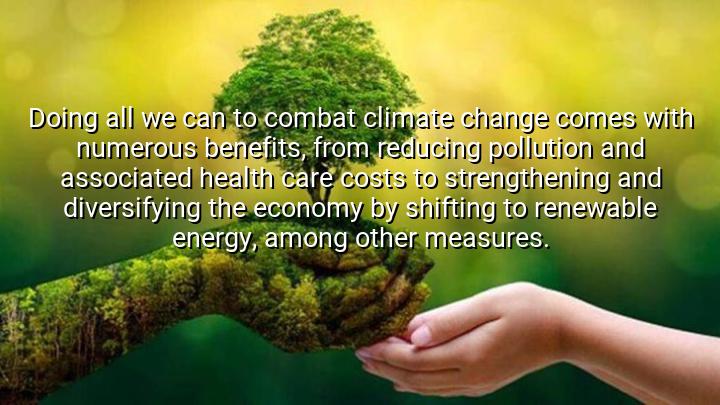




The quote “Doing all we can to combat climate change comes with numerous benefits, from reducing pollution and associated health care costs to strengthening and diversifying the economy by shifting to renewable energy, among other measures.” by David Suzuki emphasizes the multifaceted advantages of taking urgent action to address the global climate crisis. Suzuki, a renowned Canadian environmentalist, science broadcaster, and founder of the David Suzuki Foundation, has long advocated for policies that link ecological responsibility with economic and public health gains. In this quote, he underscores that tackling climate change is not just about avoiding catastrophe, but also about creating a healthier, more sustainable society.
Suzuki highlights that one of the immediate results of climate action is a reduction in pollution, which directly improves public health. Cleaner air and water mean fewer cases of respiratory and cardiovascular diseases, leading to lower health care costs and improved quality of life. He points out that shifting away from fossil fuels isn’t just environmentally responsible—it’s also economically prudent, reducing the burden on health systems and saving public resources.
Another key message in the quote is the economic opportunity that comes with transitioning to renewable energy. Suzuki frames this shift as a path to economic diversification, job creation, and innovation. Rather than portraying climate action as a financial burden, he presents it as a strategic investment that can make national economies more resilient and less dependent on unstable fossil fuel markets. This aligns with his lifelong efforts to demonstrate how environmental stewardship and economic progress can go hand in hand.
Ultimately, David Suzuki’s quote advocates for a holistic view of climate action—one that recognizes its interconnected benefits across health, environment, and the economy. It challenges the misconception that addressing climate change requires sacrifice, instead portraying it as a chance to build a more equitable, clean, and prosperous future. His message is clear: solving the climate crisis is not just an environmental imperative—it’s a comprehensive societal upgrade.

AAdministratorAdministrator
Welcome, honored guests. Please leave a comment, we will respond soon