

Death is the king of this world: 'Tis his park where he breeds life to feed him. Cries of pain are music for his banquet.
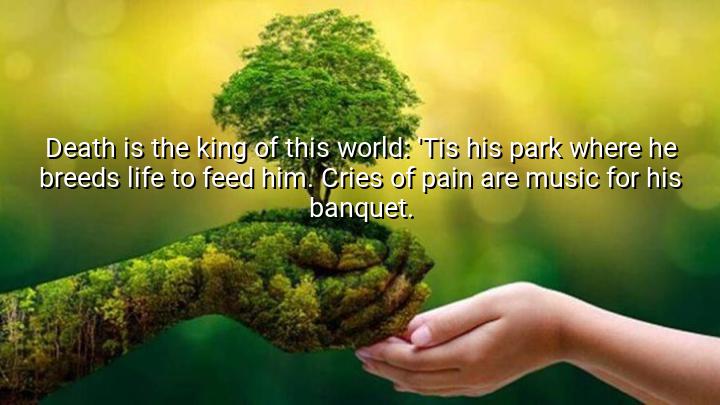




The quote "Death is the king of this world: 'Tis his park where he breeds life to feed him. Cries of pain are music for his banquet." by George Eliot explores the inevitability and dominance of death in the human experience. Eliot presents death as the ultimate ruler, reigning over life, and suggests that it feeds off the very thing it creates—life. In her view, life and death are intertwined, with life existing to sustain death, much like cycles of nature. The metaphor of death as a king who resides in a "park" and uses life to feed himself reflects the darkness and unavoidable reality of mortality.
The origin of this quote comes from Eliot's broader exploration of life and suffering in her writing. Known for her psychological realism, Eliot often delved into the complexities of human emotion, morality, and existential questions. Her works, such as Middlemarch and The Mill on the Floss, often questioned the nature of suffering and how individuals respond to the inevitable realities of life. This quote reflects her belief that death is an intrinsic part of the human condition, and it uses pain as a form of nourishment for its presence in the world.
By describing cries of pain as music for his banquet, Eliot underscores the tragic nature of suffering. Pain, in her view, is not merely an unfortunate side effect of life but an integral part of the cycle that death consumes. The vivid imagery of a banquet suggests that death feasts on the experiences and sufferings of the living, making it a necessary but grim counterpart to existence. This portrayal reflects a cynical and fatalistic view of human life, where suffering and death are not to be avoided or resisted but accepted as part of the larger, inevitable cycle.
Ultimately, this quote reflects Eliot's philosophical stance on the relationship between life and death. It challenges the romanticized notion of death and emphasizes the dark reality that both life and death are inextricably linked. By presenting death as a force that feeds on life and thrives on pain, Eliot invites readers to confront the harshness of mortality while acknowledging that it is a fundamental aspect of the human experience.

AAdministratorAdministrator
Welcome, honored guests. Please leave a comment, we will respond soon