

Death is not the end. There remains the litigation over the estate.
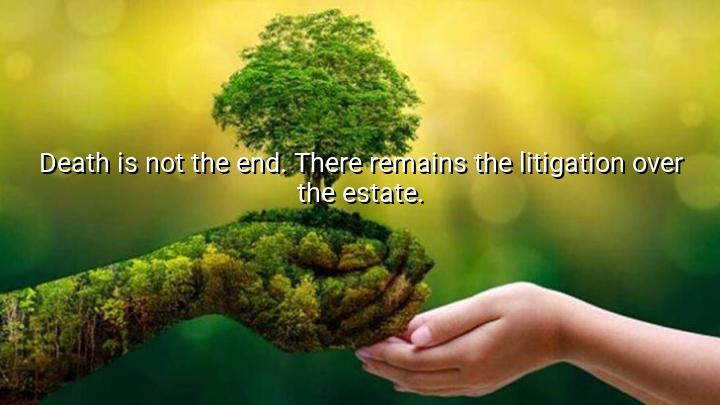




The quote "Death is not the end. There remains the litigation over the estate" by Ambrose Bierce offers a satirical perspective on the realities of inheritance and the legal battles that often follow someone's death. Bierce, known for his dark humor and cynical outlook on life, suggests that even after death, the deceased's legacy can be entangled in disputes over their estate, highlighting the way greed and conflict often overshadow the mourning process. This comment is a pointed observation on the human tendency to prioritize material wealth, even at the expense of respect for the deceased.
Bierce’s quote is also a critique of the legal system, particularly the often lengthy and contentious process of settling an estate. After a person dies, their belongings, assets, and wealth are usually subject to legal proceedings, which can lead to intense disputes between family members, heirs, or beneficiaries. By referring to these proceedings as a continuation of the conflict even after death, Bierce underscores how the pursuit of money and property can diminish the sanctity of death and make it a mere prelude to further strife.
Additionally, the quote reflects Bierce's characteristic skepticism of human nature. His works often explore the ironies and hypocrisies of society, and in this instance, he points out how death—a universally solemn event—can be reduced to another battle over resources. It serves as a reminder that the dead are often treated as commodities, with their estates becoming the focus of legal maneuvering rather than an occasion for reflection or grief.
Ultimately, this quote serves as a commentary on the materialism and self-interest that can dominate human behavior, even in the face of death. Bierce's blend of wit and critique forces the reader to confront the uncomfortable reality that death, rather than marking an end, can often lead to new conflicts that diminish the memory of the person who has passed.

AAdministratorAdministrator
Welcome, honored guests. Please leave a comment, we will respond soon