

Computer programmers, biotechnologists, environmental scientists, neuroscientists, nanotech engineers - all of these fields, and more, should have at least a course in ethics as part of their degree requirements.
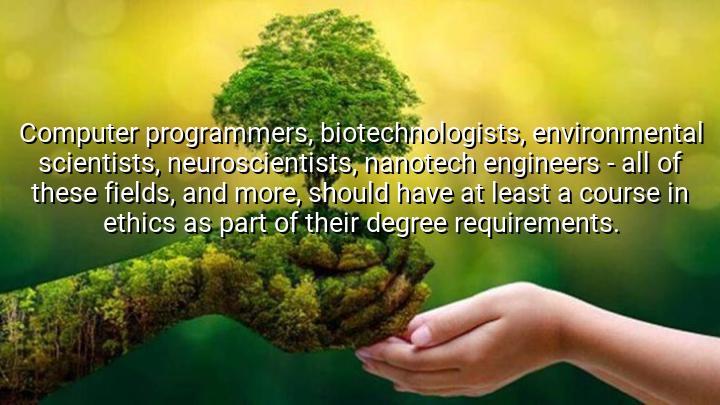




In this quote, Jamais Cascio argues for the inclusion of ethics as a core component of education in highly specialized fields like computer programming, biotechnology, environmental science, neuroscience, and nanotechnology. He suggests that as these fields continue to advance and shape society, professionals should be equipped with a solid understanding of the ethical implications of their work. This perspective emphasizes that technical knowledge alone is not enough; ethical considerations are crucial in guiding decisions that impact individuals, communities, and the environment.
Cascio’s point is that as technology and science progress, they often raise complex moral questions about how these innovations should be used. For example, advancements in biotechnology could have significant implications for human health, genetics, and privacy, while environmental science intersects with issues of sustainability and the global well-being of ecosystems. Without a grounding in ethics, professionals may unintentionally cause harm, either by neglecting human rights, privacy, or the environment in the pursuit of progress.
The origin of this quote likely stems from Cascio's broader views on technology, sustainability, and societal responsibility. As a futurist and expert on the intersection of technology and society, he has long advocated for responsible innovation. In many of his writings, he stresses the importance of foresight and ethical responsibility in managing technological advancements to ensure they benefit humanity rather than creating unforeseen harm.
Ultimately, Cascio’s statement serves as a reminder that education in these fields should not only focus on technical skills but also on fostering a deeper understanding of ethics. As technology becomes more intertwined with daily life, the ability to navigate complex ethical challenges is vital for ensuring that innovations contribute positively to society. His call for ethical education in science and technology is a proactive approach to creating a more responsible and conscientious future.

AAdministratorAdministrator
Welcome, honored guests. Please leave a comment, we will respond soon