

Preventing global warming from becoming a planetary catastrophe may take something even more drastic than renewable energy, superefficient urban design, and global carbon taxes.
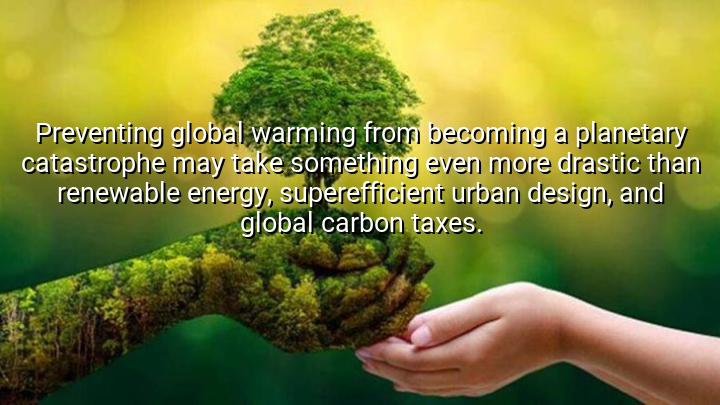




In this quote, Jamais Cascio, a futurist and environmental thinker, suggests that addressing global warming might require solutions that go beyond the typical approaches such as renewable energy, superefficient urban design, and global carbon taxes. While these measures are important steps in mitigating the effects of climate change, Cascio argues that they may not be enough to prevent global warming from escalating into a full-fledged planetary catastrophe. The quote hints at the need for even more drastic and potentially unconventional solutions to address the magnitude of the problem.
Cascio’s statement reflects the growing concern that traditional methods of combating climate change might not be sufficient to counter the rapid pace of environmental degradation. The mention of renewable energy and carbon taxes acknowledges that these are already popular solutions, but by saying something more drastic may be needed, Cascio signals the urgency of the crisis and the necessity for innovative thinking. It suggests that we may need to consider bold, transformative changes on a global scale to avoid catastrophic outcomes.
The quote also speaks to the complexity of the climate crisis and how it requires comprehensive, multifaceted strategies. Cascio implies that while efforts like green technologies and sustainable urban design are important, they might not tackle the deeper structural issues or the vast scale of change required. Therefore, radical solutions could include a combination of technological innovation, societal change, and possibly geoengineering or other high-impact strategies that alter the course of environmental damage more dramatically.
Ultimately, Cascio’s words challenge us to think beyond conventional solutions and consider more drastic measures that might be necessary to combat climate change. His statement underscores the urgency of addressing global warming and the potential need for revolutionary approaches that go beyond incremental changes, stressing that time may be running out to prevent a global disaster.

AAdministratorAdministrator
Welcome, honored guests. Please leave a comment, we will respond soon