

Change doesn't always mean progress, but the status quo isn't always the best result either. It is merely the most convenient.
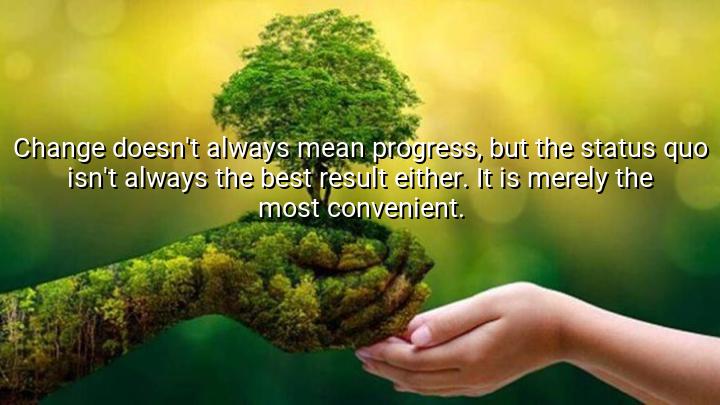




The quote by Harsha Bhogle, “Change doesn't always mean progress, but the status quo isn't always the best result either. It is merely the most convenient,” offers a nuanced view on the nature of change and comfort. Bhogle cautions that while change is often associated with progress, it doesn’t automatically lead to improvement. At the same time, he challenges the assumption that maintaining the status quo is ideal, pointing out that it often persists simply because it’s easier or more convenient, not because it is better.
As a renowned Indian cricket commentator, analyst, and journalist, Harsha Bhogle is known for his thoughtful insights not just on sports, but also on leadership, performance, and society. This quote likely stems from his reflections on how people and organizations resist innovation or disruption, preferring what is familiar over what might be challenging but necessary. His words encourage critical thinking about both change and inertia.
The quote presents a balanced perspective: it acknowledges that not all change is beneficial, preventing blind enthusiasm for reform, while also exposing the flaws of complacency. Often, systems or habits are left unchanged not because they are optimal, but because they require less effort or risk to maintain. Bhogle reminds us that true progress involves thoughtful evaluation—embracing change when it leads to growth, and questioning the default when it becomes a barrier to improvement.
Ultimately, Bhogle’s message is one of discernment. It invites us to examine both new ideas and established norms with a critical eye, rather than accepting or rejecting them based solely on habit or novelty. In doing so, we make room for more meaningful and intentional progress, guided not by ease or resistance, but by wisdom and purpose.

AAdministratorAdministrator
Welcome, honored guests. Please leave a comment, we will respond soon