

By 2020, most home computers will have the computing power of a human brain. That doesn't mean that they are brains, but it means that in terms of raw processing, they can process bits as fast as a brain can. So the question is, how far behind that is the development of a machine that's as smart as we are?
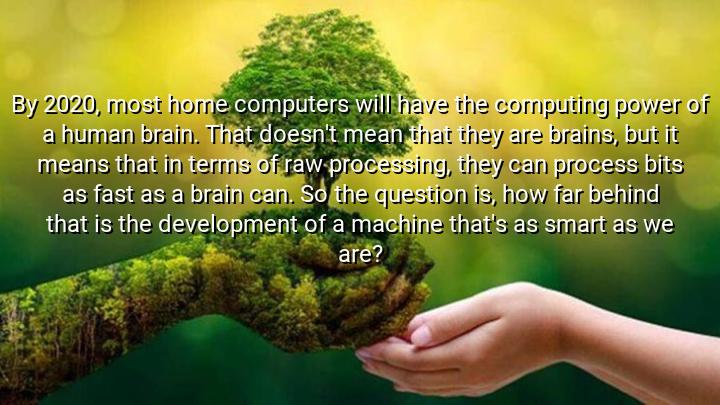




In this quote, Seth Shostak reflects on the potential future of computing power and the advancement of artificial intelligence. He suggests that by 2020, home computers could have the same computing power as a human brain in terms of raw processing speed. However, Shostak clarifies that this does not mean that computers will function like brains, but rather that they will be able to process information at similar speeds. The quote highlights the progress in technology and how it might bring us closer to creating machines that can mimic human cognitive abilities.
Shostak's comment also raises the question of how close we are to developing a machine that is not just powerful in processing data but is also as smart as humans. While computers may catch up with the processing power of the brain, the challenge remains in creating machines that possess true intelligence—not just the ability to process bits of information quickly, but to reason, understand, and adapt like humans. This reflects a deeper concern about the relationship between artificial intelligence and human intelligence, and how these technologies might evolve.
The origin of this quote comes from Shostak’s work as a SETI scientist and futurist, known for his expertise in astronomy and his discussions on the future of artificial intelligence. As a leading figure in the search for extraterrestrial intelligence, Shostak has frequently speculated about the role of advanced technology in shaping the future. His comments often explore the implications of machine learning and robotics, pushing us to think about the potential for AI to match or even surpass human intellectual capabilities.
Ultimately, Shostak's quote raises a fundamental question about the future of artificial intelligence: if computers can process data at the same rate as the human brain, how much longer will it take for machines to develop true intelligence? His speculation encourages a deeper examination of the potential risks and rewards of developing technologies that could closely mirror human cognition, and whether we are prepared for such a technological leap.

AAdministratorAdministrator
Welcome, honored guests. Please leave a comment, we will respond soon