

But suppose God is black? What if we go to Heaven and we, all our lives, have treated the Negro as an inferior, and God is there, and we look up and He is not white? What then is our response?
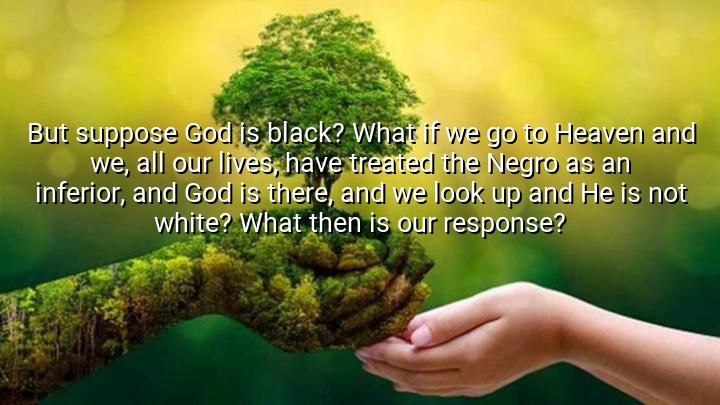




The quote "But suppose God is black? What if we go to Heaven and we, all our lives, have treated the Negro as an inferior, and God is there, and we look up and He is not white? What then is our response?" by Robert Kennedy challenges societal and racial prejudices by posing a thought-provoking question about the nature of God and the consequences of racism. Kennedy uses this rhetorical question to highlight the hypocrisy of those who hold discriminatory views, suggesting that if God were revealed to be of a different race than traditionally expected, particularly a black person, it would force a re-examination of deeply ingrained biases and the injustices perpetrated by racism.
This quote underscores the idea that racial assumptions, especially the belief in white superiority, are fundamentally flawed. By imagining a world where God is black, Kennedy calls attention to the way society has historically marginalized people of African descent and the moral reckoning that would occur if such assumptions were proven wrong. It challenges people to reflect on their actions and attitudes toward others, particularly those from marginalized groups, and forces them to confront their potential mistakes and prejudices.
The origin of this quote comes from Robert Kennedy, a prominent political figure and advocate for civil rights. Kennedy, who served as a U.S. Senator and Attorney General, was a strong supporter of racial equality and social justice. His stance on racial issues and his leadership during the civil rights movement made him a key figure in the fight against segregation and inequality. This quote reflects his commitment to addressing racism and the need for moral reflection in the face of societal wrongs.
Ultimately, Kennedy’s quote serves as a challenge to examine one’s prejudices and to recognize the inherent equality of all people, regardless of race. It also emphasizes the need for introspection and spiritual growth, as individuals are called to confront their biases in light of a higher moral truth, which in this case is symbolized by the image of God.

AAdministratorAdministrator
Welcome, honored guests. Please leave a comment, we will respond soon