

As a kid, falling was embarrassing. As I got older, I got used to falling and picking myself back up. There's not a sense of failure. It's of disappointment. You train so hard to not make mistakes. When you do, you're learning from that. How do I improve? How do I get better for the next time? Through every failure, there's something to be learned.
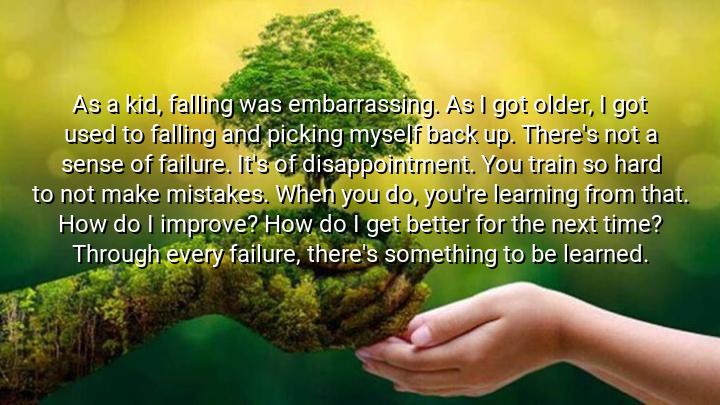




The quote — “As a kid, falling was embarrassing. As I got older, I got used to falling and picking myself back up. There's not a sense of failure. It's of disappointment. You train so hard to not make mistakes. When you do, you're learning from that. How do I improve? How do I get better for the next time? Through every failure, there's something to be learned” — comes from Michelle Kwan, a legendary American figure skater and two-time Olympic medalist. In this deeply personal reflection, Kwan shares the emotional evolution that comes with pursuing excellence — especially in a sport where both physical and psychological balance are constantly tested.
Early in the quote, Kwan discusses how falling, both literal and metaphorical, was once a source of embarrassment in her youth. But as she matured, it became a natural part of growth — something to be embraced, not feared. Her shift in perspective highlights a critical lesson in resilience: learning to see setbacks not as personal failings, but as opportunities for growth and improvement. This outlook is vital in high-performance environments, where perfection is the goal, but mistakes are inevitable.
She distinguishes between failure and disappointment, noting that while errors can be frustrating, they don’t define her. Instead, they prompt introspection and fuel a process of self-betterment: asking “How do I improve?” and “How do I get better for the next time?” These questions are at the heart of any pursuit of mastery and show her commitment to continuous learning. Kwan underscores that through every failure, there is something to be learned, reinforcing that setbacks are an essential part of long-term success.
The quote likely comes from an interview or motivational talk, as Kwan often reflects on her journey both on and off the ice, including her transition into public service and mentorship. It encapsulates the mindset that made her a champion — not just her talent, but her ability to face adversity with humility, determination, and the constant desire to evolve. Her words serve as an inspiring reminder that growth comes from perseverance, and that the most valuable lessons often arise from our most challenging moments.

AAdministratorAdministrator
Welcome, honored guests. Please leave a comment, we will respond soon