

Apology is often the first step in correcting a wrong. Having moved for a position of saying 'I don't need forgiveness,' Mr. Trump is now taking a second look at past behaviors, things that he's said and done that he regrets. While he is not asking for forgiveness for being human, he is admitting that he's made mistakes and humbly making apologies.
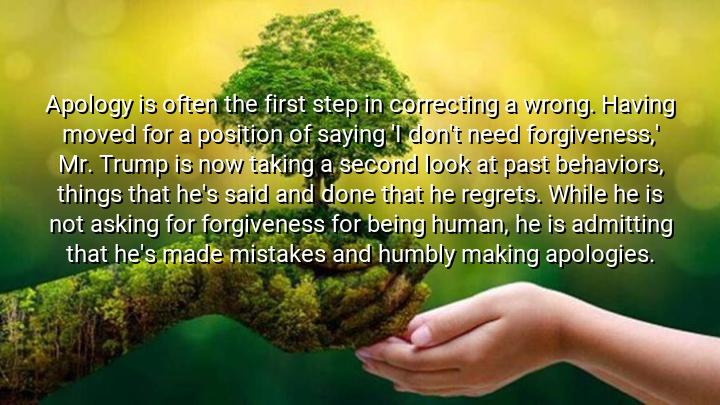




Alveda King’s quote, "Apology is often the first step in correcting a wrong. Having moved for a position of saying 'I don't need forgiveness,' Mr. Trump is now taking a second look at past behaviors, things that he's said and done that he regrets. While he is not asking for forgiveness for being human, he is admitting that he's made mistakes and humbly making apologies," emphasizes the importance of apology in acknowledging mistakes and beginning the process of healing. King highlights the idea that an apology is not just about seeking forgiveness but about showing humility and taking responsibility for one’s actions. In this case, she points out that Mr. Trump has moved from a stance of denial regarding his actions to a more reflective position, where he admits his mistakes and seeks to make amends.
The quote also touches on the human tendency to resist forgiveness or apology, especially when one feels their actions were justified or defensible. King notes that for someone like Donald Trump, moving from a position of denial or pride to one of admission and humility represents a significant shift. This process of self-reflection and accountability is essential for personal growth, as it opens the door for better understanding, reconciliation, and moving forward from past errors.
The origin of this quote likely comes from King’s experience as a civil rights leader, where forgiveness and apology are often crucial in healing societal wounds. As a strong advocate for reconciliation and spiritual healing, King understands the power of acknowledging one’s mistakes in the journey toward personal and collective growth. Her perspective likely also draws from her background in the Christian faith, where forgiveness and the act of admitting wrongs play a pivotal role in faith and moral accountability.
Ultimately, King’s statement underscores the significance of apology in making amends and starting the process of healing. Acknowledging one’s faults, as she points out, is not about seeking forgiveness for being human but about admitting mistakes and taking responsibility. This act of humility is an essential first step in improving both personal behavior and public relationships, as it opens the possibility for growth and reconciliation in any context, whether political, personal, or social.

AAdministratorAdministrator
Welcome, honored guests. Please leave a comment, we will respond soon