

And one who is just of his own free will shall not lack for happiness; and he will never come to utter ruin.
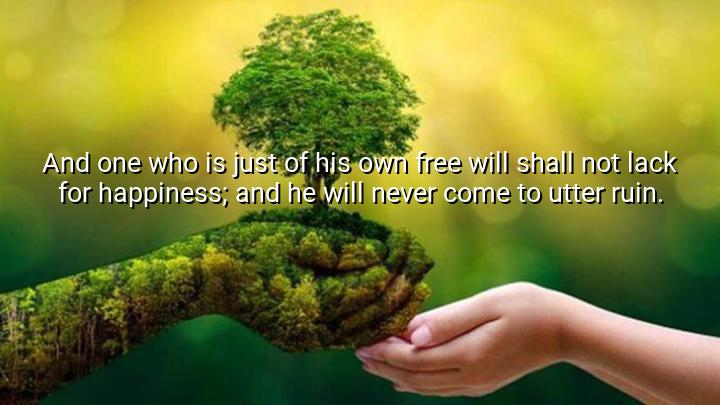




In this quote, Aeschylus asserts that a person who is just and acts with integrity out of their own free will will find happiness and avoid ruin. He suggests that moral and ethical behavior, when chosen freely rather than coerced, leads to a fulfilling and secure life. The idea is that true happiness comes not from external rewards or circumstances but from living in alignment with one’s own values and conscience, choosing what is right regardless of the outcome.
Aeschylus highlights the concept of personal responsibility, where one’s actions are not dictated by external pressures or rewards but stem from an internal commitment to justice and righteousness. The choice to live justly is portrayed as a source of strength and security, suggesting that individuals who follow this path are naturally protected from the consequences of wrongdoing, which can lead to ruin or despair.
The idea that one who acts freely and justly will never come to utter ruin underscores a deep belief in the moral order of the world. Aeschylus implies that the universe rewards justice and punishes wrongdoing, and thus those who live according to ethical principles will be sustained and protected. This notion connects to his broader philosophical views, often reflected in his plays, that justice is a foundational force in society and the universe.
Originating from Aeschylus’s exploration of justice, morality, and human nature, this quote is likely part of his works on tragic themes, such as in The Oresteia, where he delves into the consequences of moral choices. His writing often addresses the tension between personal will, societal expectations, and the divine sense of justice. The quote serves as a timeless reminder that living with integrity leads to peace and protection, both in the personal and broader cosmic sense.

AAdministratorAdministrator
Welcome, honored guests. Please leave a comment, we will respond soon