

All things are only transitory.
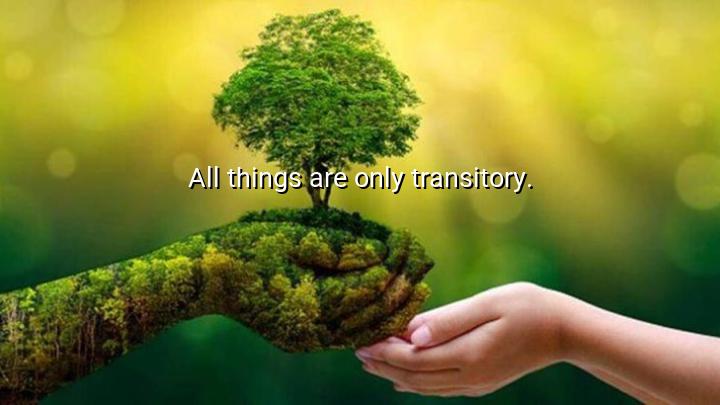




The quote "All things are only transitory" is attributed to Johann Wolfgang von Goethe, a towering figure in German literature, philosophy, and science during the late 18th and early 19th centuries. As a poet, novelist, and thinker, Goethe often explored themes of impermanence, human nature, and the flow of time. This quote reflects a core idea in his work: the ephemeral nature of existence and the inevitability of change.
At its heart, the quote emphasizes that everything in life is temporary. Whether it is joy or sorrow, success or failure, youth or age—no condition is permanent. Goethe invites us to embrace the transitory nature of the world, encouraging a mindset of detachment and acceptance. By acknowledging that all things pass, we can approach life with greater clarity, gratitude, and resilience.
This idea aligns with philosophical traditions such as stoicism and Buddhism, which also teach that understanding the impermanence of life helps us avoid unnecessary suffering. Goethe, however, presents this insight through a poetic and humanistic lens, suggesting that the fleeting nature of things gives them beauty and meaning. To recognize something as transitory is not to diminish it, but to appreciate it more deeply while it lasts.
Ultimately, Goethe’s quote is a timeless reminder to live in the present, to savor the moment, and to find peace in the flow of life’s cycles. Rather than resisting change or clinging to the past, we are encouraged to accept the truth that nothing endures forever—and in that acceptance, discover a deeper sense of wisdom and freedom.

AAdministratorAdministrator
Welcome, honored guests. Please leave a comment, we will respond soon